













































































































Wooden doors and flush doors: cores, sizes and timber
Published · Updated
A flush door is a flat door leaf made of a hardwood frame filled with a core and faced with plywood or veneer. India's flush door standard, IS 2202 Part 1, sets leaf thicknesses of 25, 30 and 35 mm depending on width. Solid timber and panelled doors are the other two wooden types.
In stock in Zanzibar
See all 11 products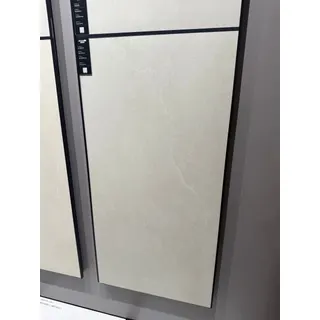
Beige Porcelain Tile 1200x600 mm, Matt Anti-Slip R10
1200 × 600 mmR10Order on WhatsAppTZS 49,680pertile
K11 Polymer Cement Waterproof Coating (Two-Component)
18 kg/barrelOrder on WhatsAppTZS 155,000perbucket






Wooden doors: solid, panelled and flush
Wooden doors fall into three groups. A solid timber door is boards or a slab of one wood. A panelled door has a frame of stiles and rails with thinner panels set into it. A flush door hides its frame under two flat faces, so a simple wood door and a modern wood door with a veneer finish can be the same construction underneath.
The flush door is the one with a published construction standard. India’s Bureau of Indian Standards describes it in IS 2202 Part 1, Wooden flush door shutters (solid core type); the figures on this page come from the 1999 edition, which a 2023 revision has since replaced.
What a flush door is made of
Every flush door in that standard is defined by four parts: the core, the frame round it, the face, and the glue. The core is blockboard, particle board or medium density fibreboard (MDF), and the last two may be combined with blockboard strips next to the stiles. Blockboard strips may be no wider than 30 mm and must be one species per board.
The frame that holds the core, lipping included, is 45–75 mm wide, and the standard allows only non-coniferous hardwood for stiles, rails and lipping because they carry the hinge and lock screws. Faces are commercial plywood or veneers, and the adhesive that bonds them to the core is phenol formaldehyde resin. Timber in the leaf may hold no more than 12% moisture. Modern flush doors come in a decorative grade, faced to be varnished, or a non-decorative grade meant for paint.
Flush door sizes and thickness
The designation tells you the opening, not the leaf. In “9 DS 21” the first number is the opening width in 100 mm modules, “DS” means a single leaf, and the last number is the opening height, so the opening is 900 × 2,100 mm. IS 2202 then subtracts 60 mm for the frame, 40 mm for the floor finish, 5 mm clearance and a 15 mm rebate to arrive at the leaf size.
| Designation | Opening (W × H) | Leaf width | Leaf height | Leaf thickness |
|---|---|---|---|---|
| 8 DS 20 / 8 DS 21 | 800 × 2,000 / 2,100 mm | 700 mm | 1,905 / 2,005 mm | 25 mm |
| 9 DS 20 / 9 DS 21 | 900 × 2,000 / 2,100 mm | 800 mm | 1,905 / 2,005 mm | 30 mm |
| 10 DS 20 / 10 DS 21 | 1,000 × 2,000 / 2,100 mm | 900 mm | 1,905 / 2,005 mm | 35 mm |
| 12 DT 20 / 12 DT 21 | 1,200 × 2,000 / 2,100 mm | 1,100 mm (two leaves) | 1,905 / 2,005 mm | 35 mm |
Source: IS 2202 Part 1:1999, tables 2 and 3. Where the opening height is measured from the finished floor, the leaf heights become 1,945 and 2,045 mm. Leaves larger than 12 DT 21 must be thicker than 35 mm.
Wood for doors: three East African timbers
The frame, the lipping and any solid door need a hardwood, and three species grown in East Africa are named for doors in PROTA, the Plant Resources of Tropical Africa database. Density is at 12% moisture content.
| Swahili name | Trade name | Density | Durability, as PROTA records it | Door use in PROTA |
|---|---|---|---|---|
| mninga | muninga, kiaat | 400–700 kg/m³ | heartwood moderately durable, moderately resistant to termites; very stable once dry | boats, doors and windows |
| mvule | iroko | 550–750 kg/m³ | heartwood generally very durable and resistant to fungi; termite reports vary | joinery, stairs, doors, frames |
| mkangazi | African mahogany | 490–660 kg/m³ | moderately durable; can be attacked by termites and pinhole borers | window frames, panelling, doors |
Sources: PROTA entries for Pterocarpus angolensis, Milicia excelsa and Khaya anthotheca.
In all three, the pale sapwood is the weak part: PROTA notes powder-post or Lyctus beetle attack in the sapwood of mninga and mvule. Wood for doors should therefore be heartwood. Our page on mninga wood covers that timber in more detail.
Door frames and how the door fits them
A door and frame are sized together. The IS 2202 allowances above assume a frame that takes 60 mm of the opening and a 15 mm rebate all round for the leaf to close into; standard frame sizes are in a separate Indian standard, IS 4021, which this page does not cover. If you order a door and door frame from different workshops, give both the same opening size and the same leaf thickness.
A wooden door frame sits against masonry and often near the floor, where damp and termites reach it first. That is where heartwood of a durable species matters most, and where PROTA’s warnings about sapwood apply.
What to check when you buy
Before you pay for a new wooden door, ask the workshop to write down:
- The construction: solid timber, panelled, or flush with a named core.
- For a flush door, the leaf thickness against the IS 2202 table: 25, 30 or 35 mm by width.
- The timber species of the frame and lipping, and that it is heartwood.
- The moisture content of the timber; IS 2202 allows no more than 12%.
- The face: plywood or veneer, decorative for varnish or plain for paint.
- The opening size the leaf and frame were made for.
- The lock to be fitted, since the stile must be wide enough for it; see our page on door locks.
Wooden doors in Tanzania and Zanzibar
Two of the three timbers above have a Tanzanian record in PROTA. Mninga grows in the moister wooded grassland of the coastal plains, and the mvule entry notes that Tanzania and Uganda were once major suppliers of iroko. All three entries flag pressure on the trees: PROTA records IUCN ratings of lower risk but near threatened for mvule, lower risk but close to vulnerable for mninga, and vulnerable for mkangazi.
The carved doors of Stone Town are a separate tradition with their own timbers; see Zanzibar doors. If you are weighing timber against other frames, our page on aluminium doors covers that option. Kitovu does not make or sell doors; it sells building materials from stock in Zanzibar.
Questions
What is a flush door?
A door leaf with smooth faces on both sides: a hardwood frame of stiles and rails holds a core, and plywood or cross-band and face veneers are glued over it. IS 2202 Part 1 covers the solid core version.
What are solid core doors?
Flush doors whose frame is completely filled. Under IS 2202 Part 1 the filling is blockboard, particle board or MDF, the last two with or without blockboard strips beside the stiles.