













































































































Geomembrane: HDPE dam liners and pond liners
Published · Updated
A geomembrane is a continuous plastic sheet, most often HDPE, laid on prepared ground to stop water seeping out of a dam, pond or tank. Strength rises with thickness: in one HDPE data sheet from UTD, puncture resistance goes from 144 N at 0.3 mm to 680 N at 1.5 mm.
In stock in Zanzibar
See all 11 products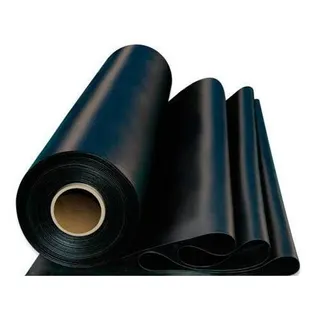
HDPE Geomembrane (Dam Liner), Smooth, 0.3 mm
Smooth0.3 mmSmooth black 0.3 mm HDPE sheet in 4 × 100 m rolls for ponds, reservoirs and damp proofing.
Order on WhatsAppTZS 1,052,000perroll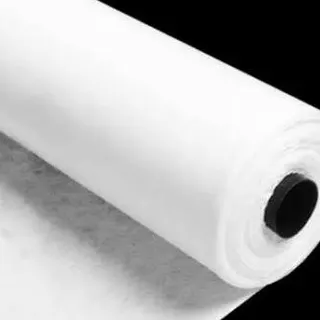
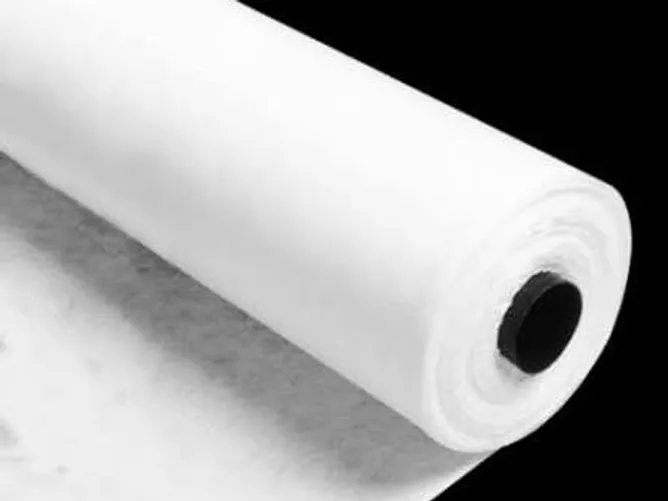
Non-Woven Needle-Punched Polypropylene Geotextile 200 g/m²
200 g/m²200 g/m² polypropylene fabric that separates, filters and protects layers in roads, drains and under liners.
Order on WhatsAppTZS 526,000perroll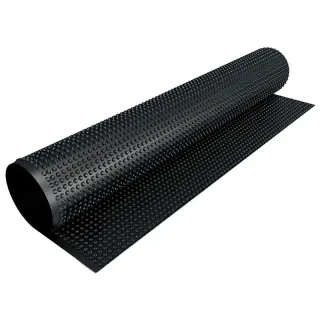
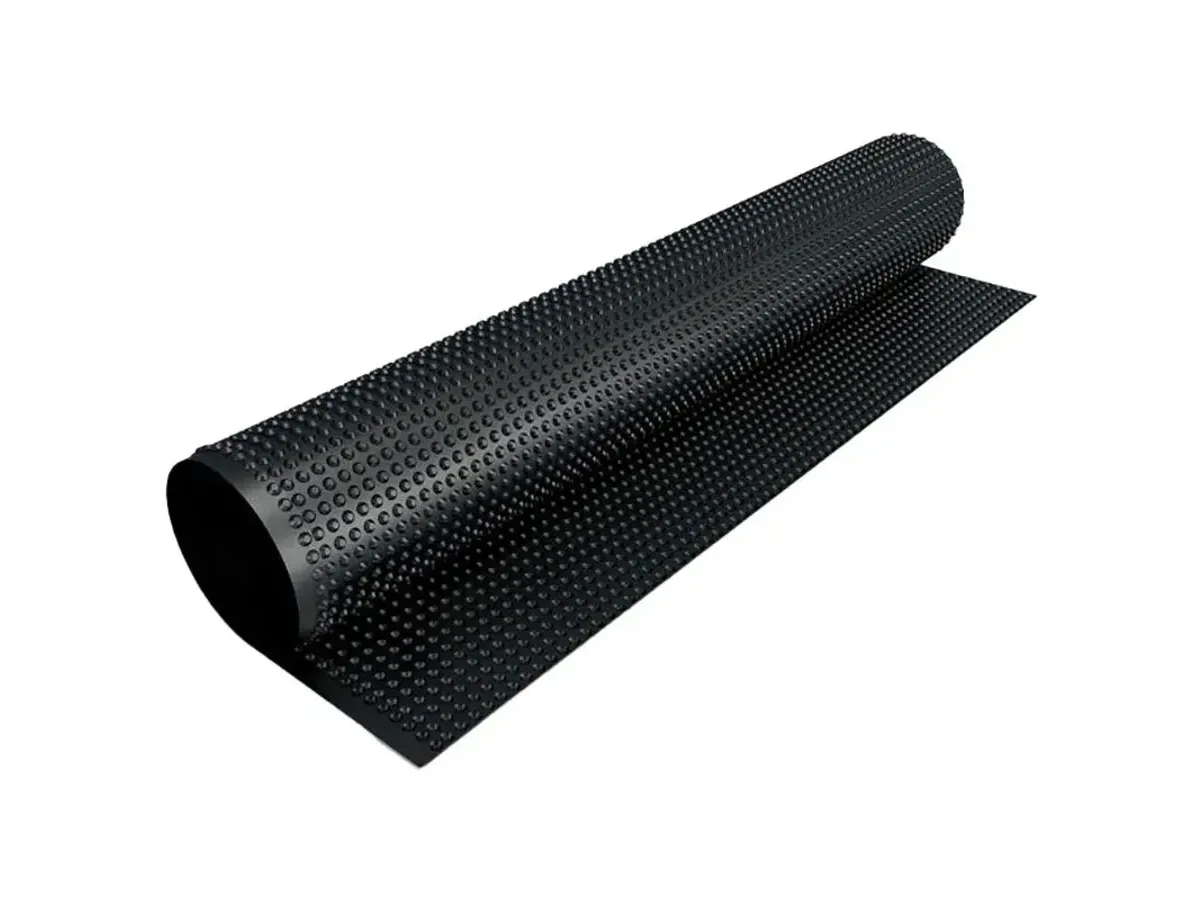
Dimple Drainage Membrane 8 mm with Geotextile (HDPE Drainage Board)
8 mm studded HDPE drainage membrane for foundation walls.
Order on WhatsAppTZS 328,000perroll

K11 Polymer Cement Waterproof Coating (Two-Component)
18 kg/barrelOrder on WhatsAppTZS 155,000perbucket


What a geomembrane is
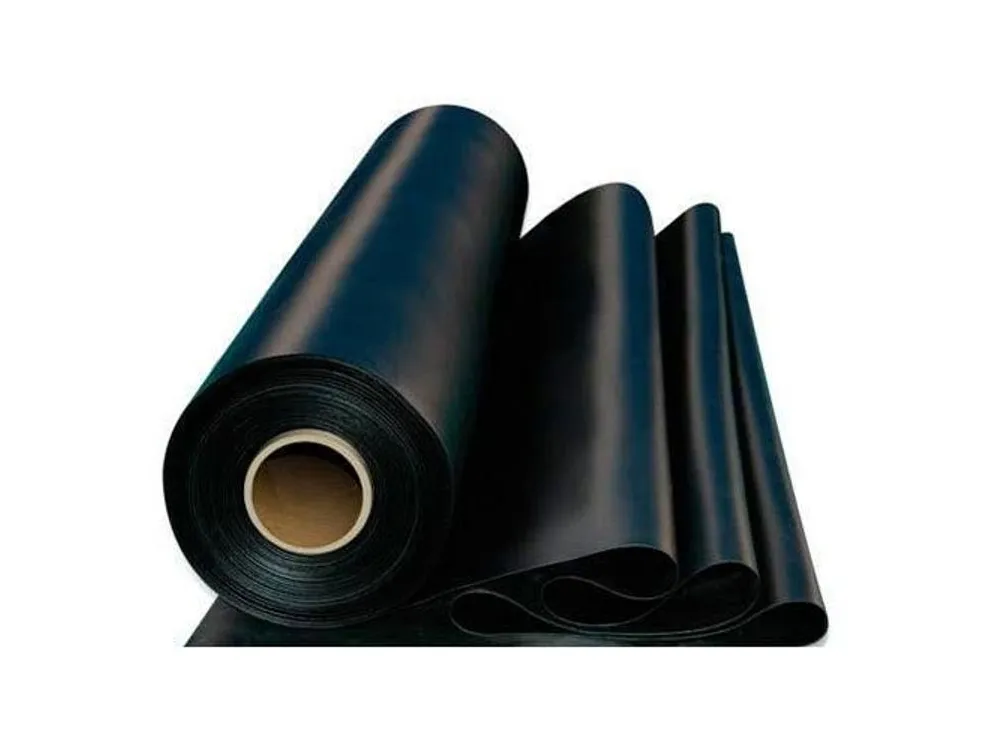
A geomembrane is a synthetic liner made as a continuous, very low-permeability sheet. Where a geotextile lets water pass, a geomembrane is there to hold it: in a farm dam, a fish pond, a water tank, a septic or waste pit. Haoyang Environment, a maker of geo membranes, describes it as a sheet installed over a prepared subgrade and sealed at the seams to form one complete barrier.
Haoyang also stresses that the sheet is not a standalone product: it works as part of a lining system with subgrade preparation, seaming and testing. A sound sheet over a stony base or with a poor seam still leaks.
HDPE geomembrane: thickness and strength
High density polyethylene geomembrane is the common choice for dams and ponds. The UTD data sheet describes its smooth HDPE as virgin polyethylene resin with about 2.5% carbon black for UV protection, density 0.94 g/cm³. The same sheet lists one product line from 0.3 mm to 3.0 mm, which shows clearly what extra thickness buys:
| Thickness | Strength at break, N/mm | Strength at yield, N/mm | Tear, N | Puncture, N |
|---|---|---|---|---|
| 0.30 mm | 11 | 7 | 45 | 144 |
| 0.50 mm | 18 | 10 | 75 | 240 |
| 0.75 mm | 26 | 14 | 113 | 360 |
| 1.00 mm | 35 | 19 | 150 | 480 |
| 1.50 mm | 53 | 29 | 225 | 680 |
Source: UTD HDPE geomembrane data sheet, test methods ASTM D 6693, D 1004 and D 4833. Values for that product, not for any other brand.
By our calculation from the table, puncture resistance at 1.5 mm is about 4.7 times the figure at 0.3 mm (680 ÷ 144). A thin HDPE geomembrane is lighter to handle, but it relies more on a stone-free base and a protective layer. The GRI-GM13 specification of the Geosynthetic Institute, used for engineered HDPE liners, starts at 0.75 mm and runs to 3.0 mm.
Other liner materials
An HDPE liner is stiff. Other polymers trade some of its chemical and UV resistance for flexibility, according to a geomembrane overview from Gabion Geotextiles:
- LLDPE and EPDM — chosen where the liner must bend easily during installation, for example around many corners.
- PVC — resistant to puncture, tear and abrasion; used for canals, landfills and tank linings.
- Reinforced polyethylene and reinforced polypropylene — sheets with a woven scrim inside for extra strength.
HDPE is also the polymer of shade net, but there it is knitted into an open mesh that lets water through, according to the net maker Agriplast. Which liner material suits a given job is a design decision; the liner in stock, described at the end of this page, is HDPE.
Dam liner and pond liner uses
A dam liner turns an earth dam that loses water through its floor and banks into one that holds it. Searches for “dam on liner” and fish pond liner come from the same need: rainwater harvesting, irrigation storage, livestock water and fish farming. Haoyang lists fish and shrimp ponds, reservoirs, canals, landfills and sewage plants as uses of HDPE geomembrane.
For a pond liner for fish, Haoyang names non-toxicity, UV resistance and long service life as the extra requirements of aquaculture liners. Whether a particular roll meets them is a question for its maker’s documents; this page does not claim it for any product.
Lining a pond: the steps
These steps follow the liner guide of Western Environmental Liner, a US liner maker, with the welding step from Haoyang. Imperial figures from the US source are given in metric, rounded.
- Prepare the base. The area must be smooth, dry and free of rocks, rubble, roots and vegetation. If it cannot be cleared, the guide suggests a compacted bedding layer of at least 15 cm (6 in) over the highest obstruction.
- Lay the underlay. A geotextile goes down first, under the liner, and can also go on top.
- Dig the anchor trench round the pond above the water level, at least about 30 cm deep and 30 cm wide (1 ft × 1 ft).
- Unroll and unfold the liner across the pond, letting it lie loose into the trench.
- Join the panels. For HDPE, adjacent panels are heat-welded into one continuous barrier (Haoyang). A single prefabricated panel needs no welding on site.
- Backfill. Fill the trench with the dug soil. Where the liner is covered, the guide gives at least 10 cm (4 in) of compacted soil, and about 30 cm (12 in) if animals walk in the pond. Compact with care so the liner does not tear.
Geomembrane and geotextile together
The two names sound alike and are often mixed up, but a pond with liner usually needs both. The non-woven geotextile goes under the sheet as a cushion against stones; a second layer over it protects the liner from the cover soil. Western Environmental Liner names 8 oz fabric as the usual underlay — about 270 g/m² by our conversion (1 oz/yd² ≈ 33.9 g/m²).
For drainage behind walls or under green roofs, a third product is used: a studded plastic sheet — see the dimple drainage membrane page.
0.3 mm HDPE geomembrane in stock in Zanzibar
Kitovu sells from stock in Zanzibar the HDPE Geomembrane (Dam Liner), Smooth, 0.3 mm. The supplier’s records give four facts about it: HDPE, a smooth surface, 0.3 mm thickness and black colour. Kitovu’s stock records add the roll size: 4 m wide and 100 m long, 400 m². The maker’s test values are not yet confirmed; the UTD figures in the table above come from a similar product and are not confirmed for this item. The price per m² and per roll is on the product card, and other sellers’ rates are on the dam liner prices page.
Questions
How do I install a dam liner?
Clear and smooth the ground, lay a geotextile underlay where stones remain, unroll the liner, join panels by heat welding and bury the edge in an anchor trench round the top of the bank. Western Environmental Liner and Haoyang describe these steps in their guides.
Can geotextiles and geomembranes be used interchangeably?
No. A geotextile lets water pass and is used to separate, filter and drain; a geomembrane stops water. They are often laid together, the geotextile protecting the liner from puncture.
How do I check that an HDPE geomembrane meets a recognised standard?
Ask for the data sheet and look for the test methods (ASTM D 6693, D 4833, D 1004) and for GRI-GM13. That specification covers HDPE from 0.75 mm to 3.0 mm, so a thinner sheet can only be compared with it, not certified under it.