














































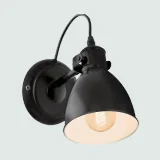


Wall lights indoors: how bright, what colour, where to fix
Published · Updated
A wall light adds light at the side of a room — beside a mirror, along a corridor, over a bed — on top of the ceiling light. The lighting maker EGLO uses about 100–150 lumens per square metre as a guide for living rooms and bedrooms, and 250–300 lumens per square metre for kitchens, bathrooms and offices.
In stock in Zanzibar
See all 11 products
Beige Porcelain Tile 1200x600 mm, Matt Anti-Slip R10
1200 × 600 mmR10Order on WhatsAppTZS 49,680pertile
K11 Polymer Cement Waterproof Coating (Two-Component)
18 kg/barrelOrder on WhatsAppTZS 155,000perbucket



What a wall light does
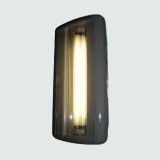
Philips describes wall lights as covering all three kinds of lighting: ambient, accent and task. It splits its own range into decorative fittings, chosen for the look and the pattern they throw, and functional ones that aim light at a job such as reading. In small rooms, Philips adds, a wall light earns its place by taking up no floor or table space at all.
Both makers treat them as a second layer. Philips recommends pairing them with ceiling lights or floor lamps for general lighting rather than relying on them alone, and EGLO presents them as a way to add lighting zones to a room that already has a main light.
How much light a room needs
EGLO gives two rough targets for total light in a room, in lumens per square metre of floor. Multiplying by the floor area gives a total for all the fittings in the room together:
| Room | EGLO guide | 12 m² room (our calculation) | 8 m² room (our calculation) |
|---|---|---|---|
| Living room, bedroom | about 100–150 lm/m² | 1,200–1,800 lm | 800–1,200 lm |
| Kitchen, bathroom, home office | about 250–300 lm/m² | 3,000–3,600 lm | 2,000–2,400 lm |
Take away what the ceiling light already gives — our method, not EGLO’s — and the rest is what the wall lights need to add. Lamp packs state their output in lumens.
Light colour by room
Colour is given in kelvin. EGLO’s room guide says warm white, 2,700–3,300 K, is the usual choice for living rooms, bedrooms and dining areas, and neutral white, 3,300–5,300 K, is often preferred in bathrooms and home offices. Some of its models are sold as “tunable white”, letting you move between the two.
Where to fix wall lights
Philips’ advice on placement is practical:
- Places that work — beside mirrors, along corridors, above bedside tables, and on a feature wall as an accent.
- Height — about eye level.
- Size — compact fittings in small rooms; larger or several fittings in big rooms so the light spreads evenly.
- Next to a mirror or picture — a fitting in proportion to it.
Bathrooms and bedsides
Two spots need more thought. In a bathroom, EGLO asks for at least IP44 on any wall light, especially near the mirror. Beside a bed, a wall-mounted fitting saves table space and gives focused reading light; EGLO points to models with an adjustable arm or a dimmer as the most practical, and lists built-in switches among the functional extras of its range. A free-standing alternative is a table lamp.
Wired or rechargeable
Philips’ models need wiring, and it suggests using a local electrician to connect them. EGLO also sells cordless wall lights that run on rechargeable batteries, which it suggests for rented homes, staircases or anywhere without a power point. For walls outside the house, the sealing and brightness rules are different — see outdoor lights.
Questions
Where should I place wall lights for the best effect?
Philips names four places: beside mirrors, along corridors, above bedside tables, and on walls you want to pick out with accent light. It suggests fixing them at about eye level.
Can wall lights be used as the primary light source in a room?
Philips advises against it: wall lights work best as extra light, paired with a ceiling light or a floor lamp for general lighting.