













































































































Flexi pipes for taps, toilets and cables: what each one is
Published · Updated
Flexi pipe is a trade name for two different things: a braided hose that connects a tap, basin or toilet cistern to the water supply, and a flexible conduit that protects electrical cables. Hydraflex's tap flexibles, for example, are EPDM rubber hoses in a stainless steel braid, rated 15 bar at 70°C with brass ends.
In stock in Zanzibar
See all 11 products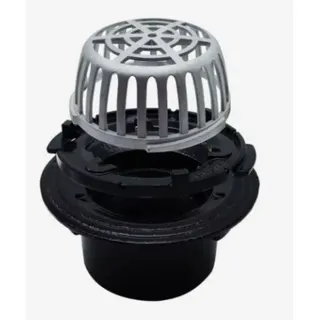
Flat Roof Drain with Dome Strainer for 110 mm Pipe
For 110 mm pipeRoof outlet that connects to a 110 mm drain pipe.
Order on WhatsAppTZS 159,900perpiece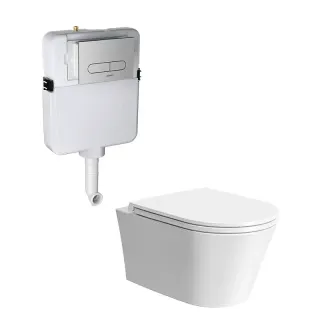
JOMOO Wall-Hung Toilet 02355-00-2, 565 x 375 x 350 mm
565 × 375 × 350 mmOrder on WhatsAppTZS 2,210,000perset


K11 Polymer Cement Waterproof Coating (Two-Component)
18 kg/barrelOrder on WhatsAppTZS 155,000perbucket



What a flexi pipe is
Ask for a flexi pipe in a hardware shop and you may be handed one of two products. The plumber’s flexi pipe is a short flexible hose, usually covered in a stainless steel braid, that runs from the water supply pipe to a tap, a basin mixer, a sink or a toilet cistern. The electrician’s flexi pipe is a flexible conduit, a ribbed tube that carries cables where a rigid conduit cannot bend.
Neither is a garden or washing hose; those are covered on the hose pipe page. Before buying, say which job the flexi pipe is for, and take the thread or pipe size of both ends.
Braided flexi pipes for taps and toilets
A tap connector has three parts: a rubber inner hose that carries the water, a stainless steel braid that holds it under pressure, and metal or plastic fittings crimped onto each end. The Hydraflex tap flexibles data sheet gives a typical build:
| Part | Hydraflex tap flexible |
|---|---|
| Inner hose | EPDM rubber, 10 mm bore |
| Braid | 304 stainless steel |
| Metal fittings | brass, CW617N and CW614N |
| Lengths | 300, 500 and 900 mm |
| Ends | 15 mm compression |
| Uses named | sinks, basins and toilets, domestic and commercial washrooms |
Hydraflex describes these flexi pipes as a way to bridge pipework that does not line up with the appliance, which is the usual reason to use one: when the supply pipe does not meet the tap tail or cistern inlet squarely, the hose takes up the difference. The firm also notes that the range is not suitable as fan coil hose for air-conditioning units. The taps page covers the tap end of the connection, and the toilets page the cistern types a connector feeds.
Brass or plastic ends: pressure and temperature
The end fittings set the limits. Hydraflex rates the same braided flexi pipe at 15 bar and 70°C with brass fittings, but at 10 bar and 65°C with John Guest push-fit and plastic fittings made of polyacetal with an EPDM O-ring. With plastic ends, the pressure rating is a third lower (our calculation: 1 − 10 ÷ 15).
For the hot side of a mixer or a water heater, check the temperature figure first: neither version in this data sheet is rated above 70°C. Hot water systems that run hotter need a connector whose data sheet states a higher temperature.
Flexible conduit for cables
The electrical flexi pipe protects wiring, not water. Electro Persian Sepahan, an Iranian maker, describes four kinds of metal flexible conduit:
- Coated: a spiral metal strip covered in PVC, which resists light, heat, UV, moisture and chemicals; used in open and wet places and for cables run underground.
- Uncoated: the bare metal spiral, with less protection from outside damage.
- Shielded: metal screening against magnetic interference, for communication wiring indoors.
- Shielded and coated: the same with a plastic outer layer, for communication wiring outdoors.
The fittings matter as much as the flexi pipe itself. The same maker warns that simple single- and double-screw glands hold weakly, can pull apart when the conduit is stretched and do not keep out dirt or moisture, while sealed conduit connectors with washers do. Male connectors join the conduit to a junction box or cable tray, female ones to steel conduit, and a coupler joins two lengths.
What to check when you buy
- Job. Water connector or cable conduit: they are not interchangeable.
- Ends. For water, the thread or compression size at the tap or cistern and at the supply pipe; Hydraflex uses 15 mm compression on both ends of this range.
- Length. Long enough to bridge the gap; 300, 500 and 900 mm are common stock lengths in the Hydraflex range.
- Rating. Pressure and temperature on the data sheet, especially for hot water.
- Materials. EPDM liner, stainless braid and brass ends for water; PVC-coated conduit and sealed connectors for cables in wet places.
Questions
What is a flexible pipe?
In plumbing, a short braided hose that links a tap or cistern to the pipework. In electrical work, the Iranian maker Electro Persian Sepahan describes it as a flexible metal hose made to protect wires and cables, sold with or without a PVC coating.