













































































































Concrete mixer: which type and size for the job
Published · Updated
The litre figure in a concrete mixer's name means different things to different makers. Camelway's JZC350 takes 560 L of dry materials and discharges 350 L of concrete per batch, while Belle's Premier 175XT has a 350 L drum that mixes 180 L. Compare batch output, not the name.
In stock in Zanzibar
See all 11 products
Polypropylene Fibre for Concrete and Mortar
12 mm polypropylene monofilament fibre against plastic shrinkage cracks, 0.9 kg per m³.
Order on WhatsAppTZS 15,100perkg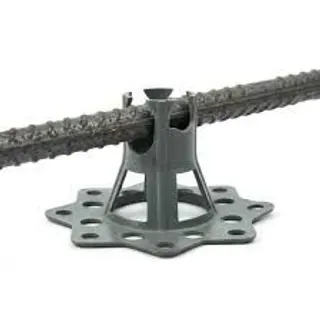
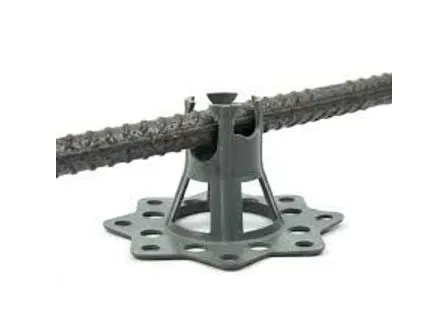
Plastic Rebar Chairs with Base (Rebar Spacers)
Plastic chairs that hold rebar at the right cover while concrete is poured.
Order on WhatsAppTZS 2,630perpiece
K11 Polymer Cement Waterproof Coating (Two-Component)
18 kg/barrelOrder on WhatsAppTZS 155,000perbucket





What a concrete mixer does and the main types
A concrete mixer turns cement, sand, stone and water into concrete in a rotating drum or pan. The catalogue of Chinese maker Camelway Machinery sorts its range into five families, grouped here into four:
- Self-reversing drum mixers (its JZC and JZM series): portable, commonly fitted with two tyres, for small construction projects. The maker lists concrete, mortar and grout among their uses.
- Diesel drum mixers (JZR series): the same idea with a diesel engine, which the catalogue recommends for areas short of electricity.
- Twin-shaft and planetary mixers (JS and JN series): heavy pan mixers for batching plants, from 500 L upward.
- Mini portable mixers (JH series): drums of 100–125 L with a 370 W motor.
The tilting-drum site mixer, whose drum tips forward to pour, is a different design. Altrad Belle’s Premier XT range in the UK is one example, offered with a Yanmar diesel engine or an electric motor for 110 or 230 V.
Mixer sizes: drum volume against batch output
Mixer names can mislead. A number such as 350 on the side of a mixer can describe the drum, the dry load or the finished batch, depending on the maker.
| Model | Type | Volume figure the maker gives | Concrete per batch |
|---|---|---|---|
| Camelway JH | mini portable | drum 100–125 L | not stated |
| Belle Premier 100XT | tilting drum | drum 250 L | 110 L |
| Belle Premier 150XT | tilting drum | drum 300 L | 160 L |
| Belle Premier 175XT | tilting drum | drum 350 L | 180 L |
| Belle Premier 200XT | tilting drum | drum 400 L | 220 L |
| Camelway JZC350 | reversing drum, electric | charging 560 L | 350 L |
| Camelway JZR350 | reversing drum, diesel | charging 560 L | 350 L |
| Camelway JZC500 | reversing drum, electric | charging 800 L | 500 L |
| Camelway JS500 | twin-shaft pan | charging 800 L | 500 L |
Two machines both sold as “350” can therefore produce batches of 180 L and 350 L. Before comparing offers, ask the seller which figure the name refers to and what the discharge volume per batch is.
What to check when you buy a concrete mixer
- Batch output in litres. This sets how many batches a slab or a column pour will take.
- Output per hour. Camelway rates its JZC350 and JZR350 at 10–14 m³ per hour, the JZC500 at 18–20 m³ and the JS500 twin-shaft mixer at 25 m³, which matters when a pour has to go in without a break.
- Power source. Electric models need a supply of the right voltage, and the JZC350’s mixing motor is rated at 4.5 kW; the JZR350 in the catalogue runs on an 11 kW single-cylinder diesel instead and carries its own 110 L water tank.
- Largest stone. The JZC series is rated for aggregate up to 60–80 mm.
- Drum speed. Makers state it in rpm: 14 for the JZC350, 19 for the Belle Premier XT models.
How many batches per cubic metre
With the batch size known, the arithmetic is simple (our calculation from the figures above): a cubic metre of concrete takes about 3 batches from a mixer that discharges 350 L, about 6 from a Belle Premier 175XT, and about 9 from a Premier 100XT.
The same arithmetic helps when an additive is dosed per cubic metre. Kitovu has Polypropylene Fibre for Concrete and Mortar in stock in Zanzibar, which the owner’s details dose at 0.9 kg per m³ for plastic shrinkage crack control. For a 350 L batch that comes to about 0.32 kg (our calculation: 0.9 × 0.35). For the cement that goes into the drum and what its strength class means, see cement types and grades; for other concrete additives, see concrete admixtures. Access frames for pouring and working at height are covered under scaffolding.
Kitovu does not sell concrete mixers.