













































































































Water tank and swimming pool waterproofing: what the data sheets say
Published · Updated
Water tank waterproofing and swimming pool waterproofing both go on the water side: the data sheets read for this page describe a cementitious coating applied in 2–3 coats, reinforced with mesh at corners and then tiled. A drinking-water tank needs a product whose own document approves contact with drinking water; one bitumen paint's sheet excludes it.
In stock in Zanzibar
See all 11 products
K11 Polymer Cement Waterproof Coating (Two-Component)
18 kg/barrelBrush-on cement coating for bathrooms, kitchens, balconies, basements and pools; tiles can go over it.
Order on WhatsAppTZS 155,000perbucket
APP Torch-On Waterproofing Membrane, Mineral Finish
3 mm, 4 mmTorch-on APP roll with a mineral top for flat roofs, terraces and foundations.
Order on WhatsAppTZS 192,000perroll
Water-Based Bitumen Primer for Waterproofing Membranes
20 kgWater-based primer brushed on the base before a bitumen membrane goes down.
Order on WhatsAppTZS 126,240perbucket
Dimple Drainage Membrane 8 mm with Geotextile (HDPE Drainage Board)
Studded drainage membrane that protects foundation walls below ground.
Order on WhatsAppTZS 328,000perroll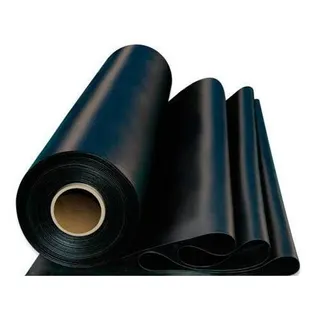
HDPE Geomembrane (Dam Liner), Smooth, 0.3 mm
Smooth0.3 mm0.3 mm HDPE sheet, ordered by Kitovu for damp proofing under floor slabs.
Order on WhatsAppTZS 1,052,000perroll




How tank and pool waterproofing works
A tank or pool is a concrete box that holds water against its walls and floor. The water presses outwards; on a tank below ground, groundwater may also press inwards. The waterproof layer normally goes on the water side, where it can be inspected, repaired and tiled, and where the pressure pushes it against the concrete rather than away from it.
The pressure involved is modest. Our calculation for the floor of a 2 m deep pool: 1,000 kg/m³ × 9.81 m/s² × 2 m ≈ 0.02 MPa. For comparison, the JUYONS data sheet gives an impermeability of at least 0.5 MPa for its K11 coating. That figure describes the cured film in a test, not a whole pool with joints and pipes — which is why the details below matter more than the headline number.
Drinking water, pool water and other tanks
The first question is what the tank will hold. Data sheets answer it in their own words, and those words are the only safe guide.
| Product | What its document allows | What it says about drinking water |
|---|---|---|
| JUYONS K11 polymer cement coating | swimming pools and pools among its listed uses | not mentioned in the data sheet or on the bucket |
| Mapei Mapelastic Zero | concrete basins for containing water; swimming pools under tiles | not stated in the sheet read for this page |
| Barrettine Black Bitumen Paint | lining of non-potable water tanks | conforms to BS 6949 “excluding use in contact with potable water” |
For a tank you drink from, use a product only when its data sheet or certificate states approval for contact with drinking water. If the document is silent, as with the first two rows, ask the maker in writing before you buy. A rainwater or irrigation tank is a different case, and products such as bitumen paint are written for it.
What you need
| Item | Why | Named in |
|---|---|---|
| Two-part cementitious coating | the waterproof layer itself | JUYONS K11 (about 1.5 kg/m² for each millimetre); Mapelastic Zero (about 1.7 kg/m² for each millimetre, trowelled) |
| Alkali-resistant glass-fibre mesh | strengthens the fresh first layer in pools and basins | Mapei recommends its Mapenet 150 for terraces, balconies, basins and pools |
| Joint tape and drain or pipe kits | seals floor-wall junctions, joints and openings before the main coat | Mapei Mapeband and Drain ranges |
| Tile adhesive and grout for pools | fixes the finish onto the membrane | Mapei names C2 or C2F cement adhesives, CG2 cement grout or RG epoxy grout |
| Silicone sealant | closes movement joints in the tiling | Mapei Mapesil AC |
In Zanzibar, Kitovu stocks the JUYONS K11 Polymer Cement Waterproof Coating (Two-Component). Swimming pools appear among the uses on its sheet; drinking water does not.
Steps for a pool or tank, from the data sheets
The order follows Mapei’s sheet for Mapelastic Zero in basins and pools, with the JUYONS K11 sheet where it adds or differs. Follow the sheet for the product you actually use.
- Clean the concrete back to sound material. Mapei removes cement laitance, dust, grease and release oil by sandblasting or high-pressure water, and repairs damaged concrete with a repair mortar first.
- Wet down porous concrete before the first coat, leaving no pools of water on it (Mapei, JUYONS).
- Seal the details. Tape the junctions between floor and walls, the control joints, and fit kits to drains and outlets before the main coat (Mapei).
- Mix. Mapei pours the liquid component first and adds the powder while mixing with a low-speed mechanical mixer. JUYONS mixes for 3–5 minutes; its batch has a 30-minute working life, and water may not be added to it.
- Trowel the first layer, mesh in. Mapei trowels a first coat and embeds the mesh while it is still fresh.
- Further coats. Mapei applies the next layer after 4–5 hours, until the film reaches 2 mm or more. JUYONS builds up 2–3 thin coats, crossing the direction each time.
- Protect while it cures. Mapei keeps rain and water off for a full day after application and shades the coat in hot, dry or windy weather.
- Tile. The Mapei sheet sets a curing period of 5 days or more before ceramic tiling, and states that Mapelastic Zero must not be left exposed in a swimming pool. The tiles go on with the adhesive and grout listed above, and the joints are sealed with silicone.
Tanks below ground
An underground tank can take water from both sides: from inside when full, from the soil when empty and the water table is high. Bostik’s Aquaprufe sheet, for a coating on the inner face of a wall, asks that hydrostatic pressure be prevented by building an inner retaining wall in severe cases; on outer faces below ground it protects the dried coating with fibreboard before backfilling. Sheet membranes for the outside of buried structures are covered on the waterproofing membrane page.
Tank and swimming pool waterproofing mistakes in the data sheets
- Leaving the coating exposed in a pool. Mapei says Mapelastic Zero must not be; it is a layer under tiles.
- Rushing the tiling. Mapei asks for 5 days of curing first; JUYONS gives no figure, so ask.
- Thinning the mix with water. JUYONS forbids adding water after mixing.
- Skipping mesh at corners and cracks. Mapei recommends it in every pool and basin.
- Using a non-potable product in a drinking tank. The Barrettine sheet is explicit; the other two sheets in the table are silent, which is not the same as approval.
- Working outside the temperature range. 5–35°C for JUYONS K11; +8 to +35°C for Mapelastic Zero.
Questions
How do you waterproof a water tank?
Clean the concrete back to a sound surface, seal joints and pipe entries first, then apply a cementitious coating in 2–3 thin coats as its data sheet sets out. For a tank holding drinking water, choose only a product whose document approves contact with drinking water.