













































































































Porcelain tiles: what they are and how to choose
Published · Updated
Porcelain tiles are ceramic tiles fired until they absorb almost no water. Villeroy & Boch's wear-resistance sheet puts porcelain stoneware in group BIa of DIN EN 14411: water absorption of 0.5% or less. Choose between glazed and full-body, then by slip class and size for the room.
In stock in Zanzibar
See all 11 products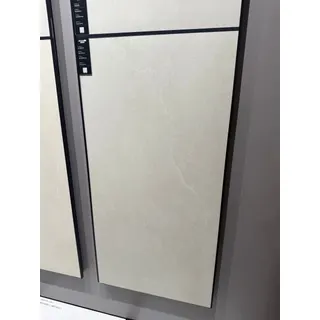
Beige Porcelain Tile 1200x600 mm, Matt Anti-Slip R10
1200 × 600 mmR10Beige 1200 × 600 mm porcelain, matt R10 anti-slip, for floors and walls, wet areas included.
Order on WhatsAppTZS 49,680pertile
K11 Polymer Cement Waterproof Coating (Two-Component)
18 kg/barrelWaterproof layer for bathroom and kitchen floors that tiles are laid over.
Order on WhatsAppTZS 155,000perbucket






What porcelain tiles are
Porcelain tiles, often searched in Tanzania as posline tiles, are ceramic tiles with a dense body fired until it absorbs almost no water. The European tile standard sorts tiles by that figure. The Villeroy & Boch wear-resistance sheet lists porcelain stoneware under DIN EN 14411, group BIa: it may absorb no more than 0.5% water.
Vitrified tiles is the trade name Indian catalogues use for tiles of the same kind. The label “porcelain” or “vitrified” on a box proves little by itself; the water absorption value, if printed, is what places a tile in BIa.
Glazed, polished and full-body porcelain
Modern porcelain tile comes in three main builds. The difference is where the pattern sits and what is left when the surface wears.
| Type | What you see | What wears |
|---|---|---|
| Glazed porcelain (GVT in Asian catalogues) | Printed glaze over a porcelain body | The glaze layer, depending on how hard and thick it is |
| Polished glazed (PGVT) | Glaze polished to a gloss | The glaze; a polished gloss is one of the finishes the sheet names as a wear factor |
| Full-body or unglazed porcelain | The same colour through the whole thickness | The body itself; deep abrasion is limited to 175 mm³ under DIN EN ISO 10545-6 |
For porcelain tile flooring at home, a glazed tile in the right wear group is enough. Villeroy & Boch says unglazed porcelain shows almost no wear even after decades of intensive use, and recommends it for the hardest-used spots such as shop entrances.
Non-slip porcelain tiles
Non slip tiles are graded by a ramp test, not by how rough they feel. The acceptance angles for shod feet, as printed in the Villeroy & Boch slip-resistance sheet:
| Class | Angle reached on the ramp |
|---|---|
| R9 | 6°–10° |
| R10 | over 10°, to 19° |
| R11 | over 19°, to 27° |
| R12 | over 27°, to 35° |
| R13 | over 35° |
Barefoot areas have their own classes: A from 12° to 18°, B above 18° up to 24°, C above 24°. Showers and pool surrounds need at least B under the German rules the sheet quotes. Examples from the same workplace rules (ASR A1.5):
- toilets: R9;
- changing rooms and washrooms: R10;
- outdoor entrances: R11, or R10 with a 4 cm³/dm² displacement space (V4);
- restaurant kitchens: R12.
An anti slip tile or non slip ceramic tile marked R10 therefore meets the class those rules set for washrooms; for a walk-in shower, look for a barefoot class as well. These are workplace rules: the sheet notes that none exist for private bathrooms. The sheet adds that small tiles grip better than large ones of the same surface, because the joints help.
Large format: 1200 × 600 and 600 × 1200 tiles
1200x600 tiles and 60x120 tiles are the same size, named in a different order. Each piece is 0.72 m² (our calculation: 1.2 m × 0.6 m), so a 15 m² room takes 21 tiles before cuts (15 ÷ 0.72 = 20.8). Fewer pieces mean fewer joints, which also means less of the grip that joints give.
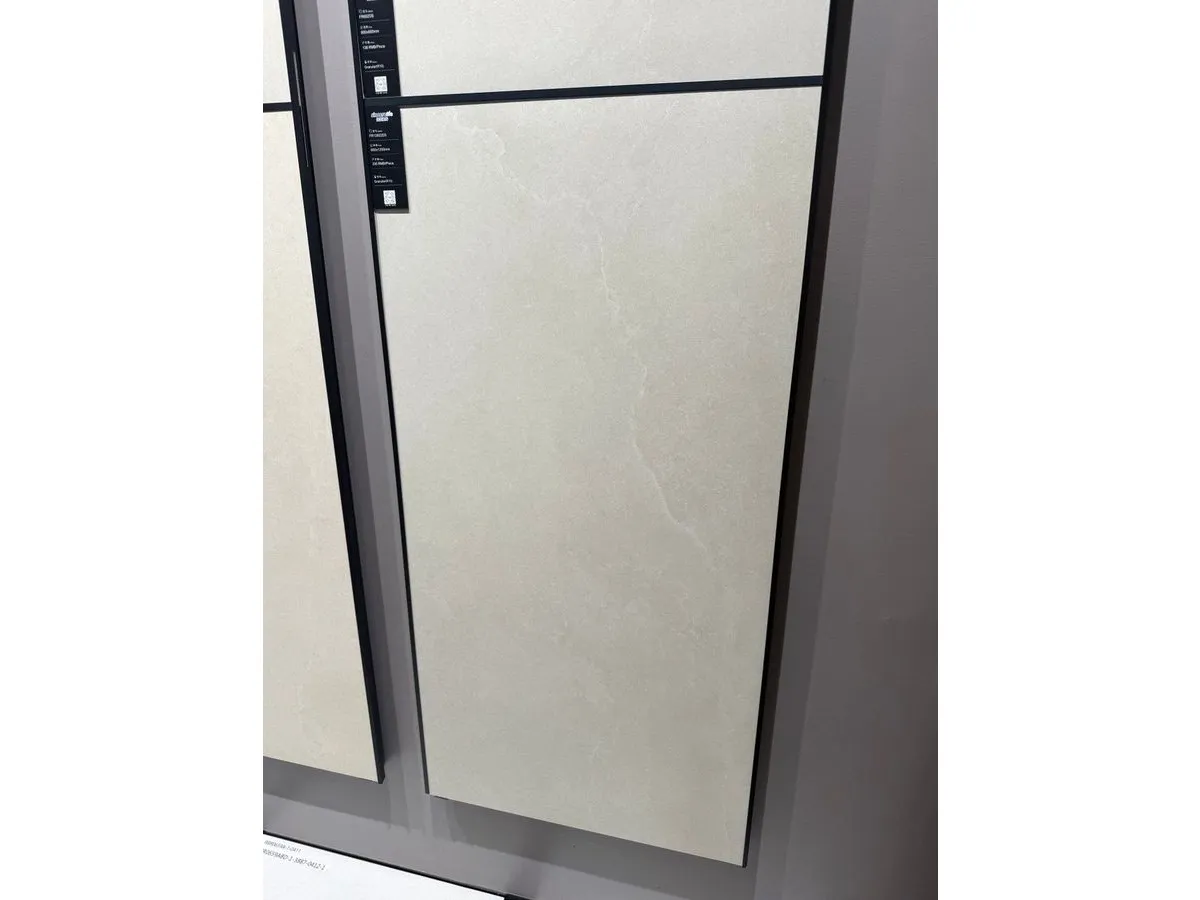
The large format tile Kitovu keeps in Zanzibar is the Beige Porcelain Tile 1200 × 600 mm, Matt Anti-Slip R10: a beige floor tile with a stone look and a granular matt surface. Thickness, box contents and water absorption are not confirmed for this item yet; ask on WhatsApp before you plan a large order.
Where porcelain floor tiles go
Floor wear groups for glazed tiles run from 1 to 5; group 0 is not for floors. The same wear sheet puts a whole living area, bathrooms and balconies in group 3, kitchens, private entrances and terraces in group 4, and restaurants and hotel lobbies in group 5. Porcelain floor tiles for the kitchen and terrace side of a house therefore need group 4.
For a full comparison with ceramic tiles and a size table, see floor tiles. Wet-room choices are on the bathroom tiles page.
Questions
What are vitrified tiles?
Vitrified means fired until the body turns glass-like and takes up very little water. Indian catalogues use the word for the same low-absorption tiles that European makers call porcelain stoneware; check the water absorption figure on the box rather than the name.
Where can you use vitrified tiles?
On floors and walls indoors, and in busy areas if the wear group fits. Villeroy & Boch recommends unglazed porcelain stoneware for the heaviest wear, such as entrances and till areas; for wet floors, pick the slip class first.