










Grease traps for kitchen drains
Published · Updated
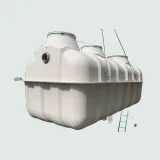
A grease trap is a tank on a kitchen drain that slows the waste water so fats, oils and grease float up and food solids sink, letting only the water between them flow on. The City of Toronto requires it to be emptied before grease and solids reach 25% of its liquid volume.
In stock in Zanzibar
See all 11 products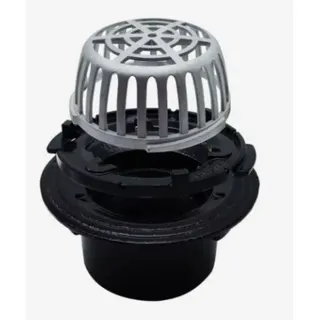
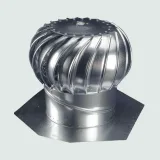
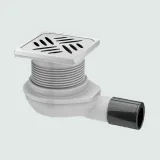
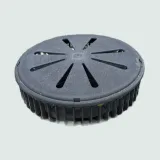
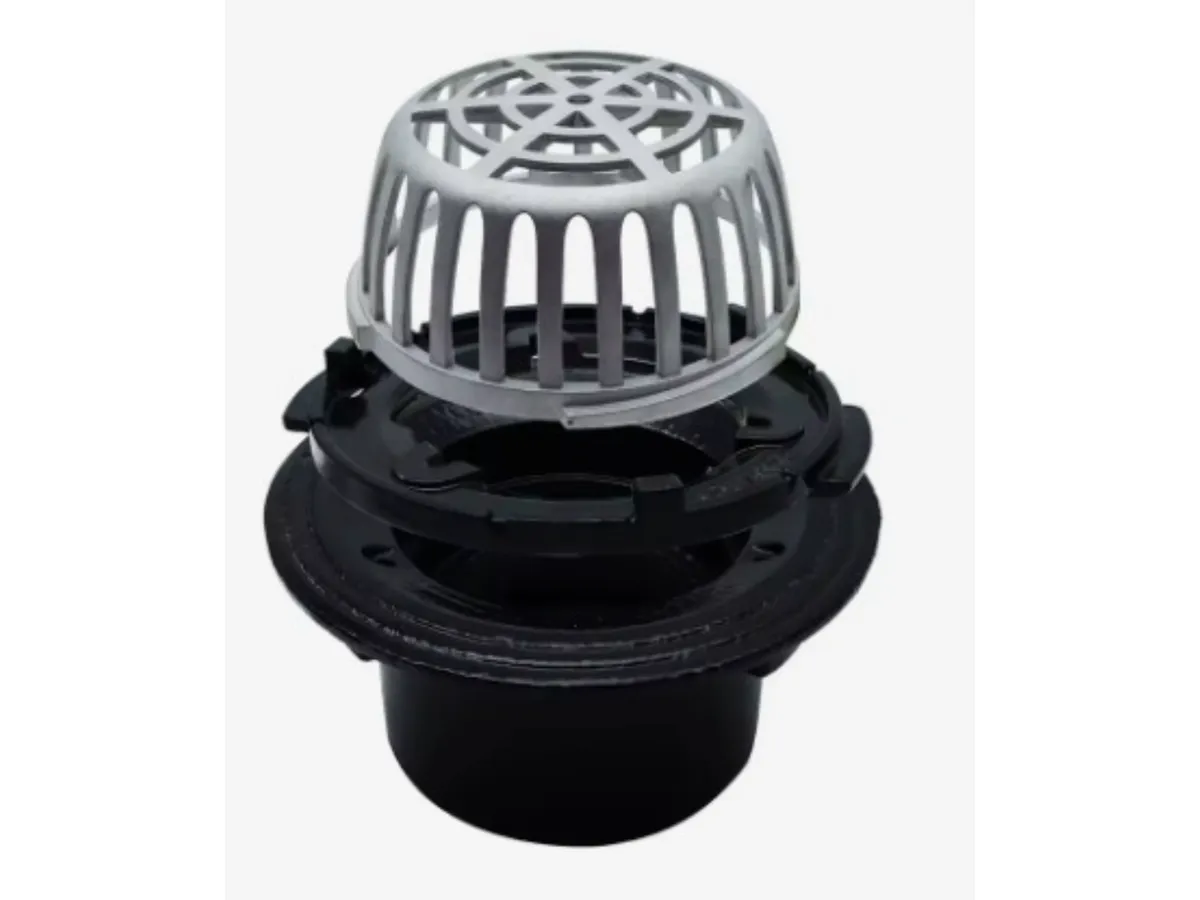
Flat Roof Drain with Dome Strainer for 110 mm Pipe
For 110 mm pipeOutlet for flat roofs and terraces, with a dome strainer, for 110 mm pipe.
Order on WhatsAppTZS 159,900perpiece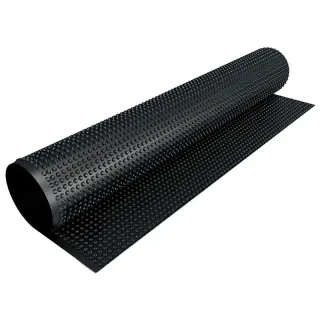
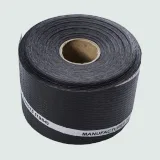
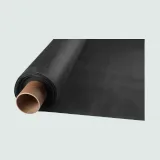
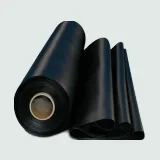
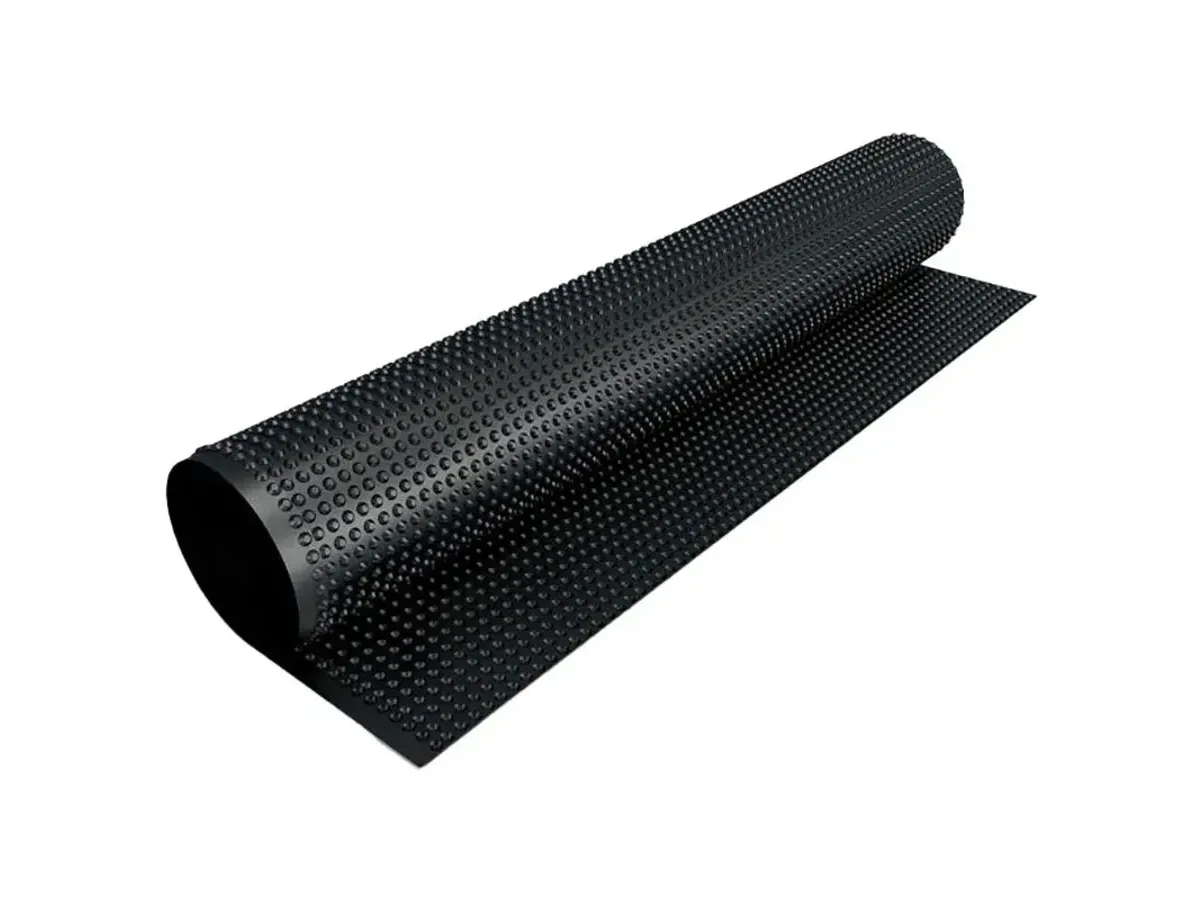
Dimple Drainage Membrane 8 mm with Geotextile (HDPE Drainage Board)
Studded membrane that leads water away from foundation walls.
Order on WhatsAppTZS 328,000perroll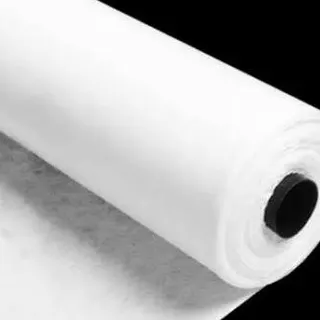
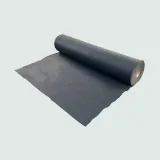
Non-Woven Needle-Punched Polypropylene Geotextile 200 g/m²
200 g/m²Wrap for drainage gravel: it lets water through and keeps soil out.
Order on WhatsAppTZS 526,000perroll
What a grease trap is
A grease trap sits between a kitchen and the sewer, septic tank or soak pit. Its job is to stop fats, oils and grease — FOG in drainage terms — from leaving the building. Hot fat runs freely down a sink, but it cools in the pipe, sets hard and narrows the line until it blocks.
Mahoney Environmental, a US grease collection company, lists what usually drains into a grease trap: the washing-up sinks, the dishwasher, mop sinks and kitchen floor drains. It is not a septic tank: it treats only the kitchen’s waste water, not the whole building’s.
How a grease trap works
The trap gives the water time to separate. Mahoney Environmental names its parts in the order the water meets them:
- Inlet pipe — brings waste water from the kitchen.
- Inlet tee — slows the flow and lets it cool, so the grease starts to firm and separate.
- Baffle walls — hold the flow back on the inlet side so the grease has time to rise, and keep the floating layer away from the outlet.
- Outlet fitting — draws water from low in the tank, below the grease layer, so only water leaves.
- Outlet pipe — carries that water on to the sewer.
- Covers — one over each side of the tank for cleaning.
The result is three layers: grease on top, food solids on the bottom, clearer water in between. The trap does nothing to the grease afterwards; it only stores it until someone takes it out.
Grease trap or grease interceptor?
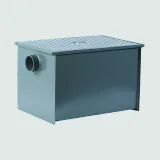
The two names are often used for the same device, but the engineering firm NY Engineers treats them as different units that differ in size and place:
| Grease trap (hydromechanical) | Grease interceptor (gravity) | |
|---|---|---|
| Size | compact unit | large tank |
| Where | inside, often under a sink or beside it | buried outside the building |
| Cleaning | frequent; Mahoney says every week or two in a busy kitchen | less often; pumped out by a tanker |
| Suits (NY Engineers) | smaller kitchens | large kitchens with high grease output |
A third type, the automatic grease removal unit, skims the grease into a separate container by itself; solids still settle and still need removing.
Where it goes in the drain run
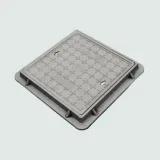
A grease trap serves the kitchen drainage only, as Mahoney Environmental points out, so toilet waste and rainwater bypass it. Since the whole contents must come out at each service, the lids have to stay reachable; on an outside tank they are manhole covers set at ground level. After the trap, the water continues in ordinary drainage pipes.
Cleaning and the 25% rule
The City of Toronto sets out a maintenance standard in its grease interceptor code of practice:
- Hydromechanical grease traps — service every four weeks, or before grease and solids together reach 25% of the liquid volume, whichever comes first.
- Gravity interceptors — pump out before fats, oils, grease and solids exceed 25% of the liquid volume.
- Proper servicing — remove the entire contents, then clean and inspect the unit, including removable parts.
- Records — Toronto asks food businesses to keep service and disposal records for seven years.
Mahoney Environmental explains the reason for the 25% figure: once the grease and solids fill a quarter of the trap, it stops separating properly and grease starts to pass through.
What not to pour into grease traps
Toronto tells kitchens not to use chemicals or other agents to push grease through — bleach, enzymes, bacteria, solvents or hot water. They only dissolve the fat for a while, and it hardens again further down the drain. Mahoney Environmental adds frying oil, food scraps and degreasers to the list. Used cooking oil belongs in a collection container, not in the sink, even with a grease trap fitted.
Questions
How does a grease trap work?
Waste water enters through an inlet that slows and cools it. Grease rises and solids settle, baffles hold the floating layer back, and the clearer water in the middle leaves through the outlet.
What is the difference between a grease trap and a grease interceptor?
The names are often swapped. In common use a grease trap is a compact unit inside the kitchen or under a sink, while a grease interceptor is a large tank buried outside that holds more and is pumped out less often.
How often should you clean a grease trap?
Toronto's code of practice asks for small indoor units to be serviced every four weeks, or sooner if grease and solids reach 25% of the liquid volume. Large outdoor tanks are pumped on the same 25% trigger.