













































































































Bitumen paint and bitumen emulsion: types and how to apply them
Published · Updated
Bitumen paint is bitumen thinned so it can be brushed cold, either with a solvent or as a water-based emulsion. Barrettine's solvent paint data sheet gives 4–6 m² per litre on concrete and a second coat 2–4 hours after the first; Bostik's Aquaprufe emulsion needs about 24 hours per coat and must be covered.
In stock in Zanzibar
See all 11 products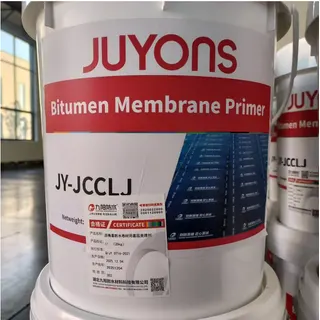
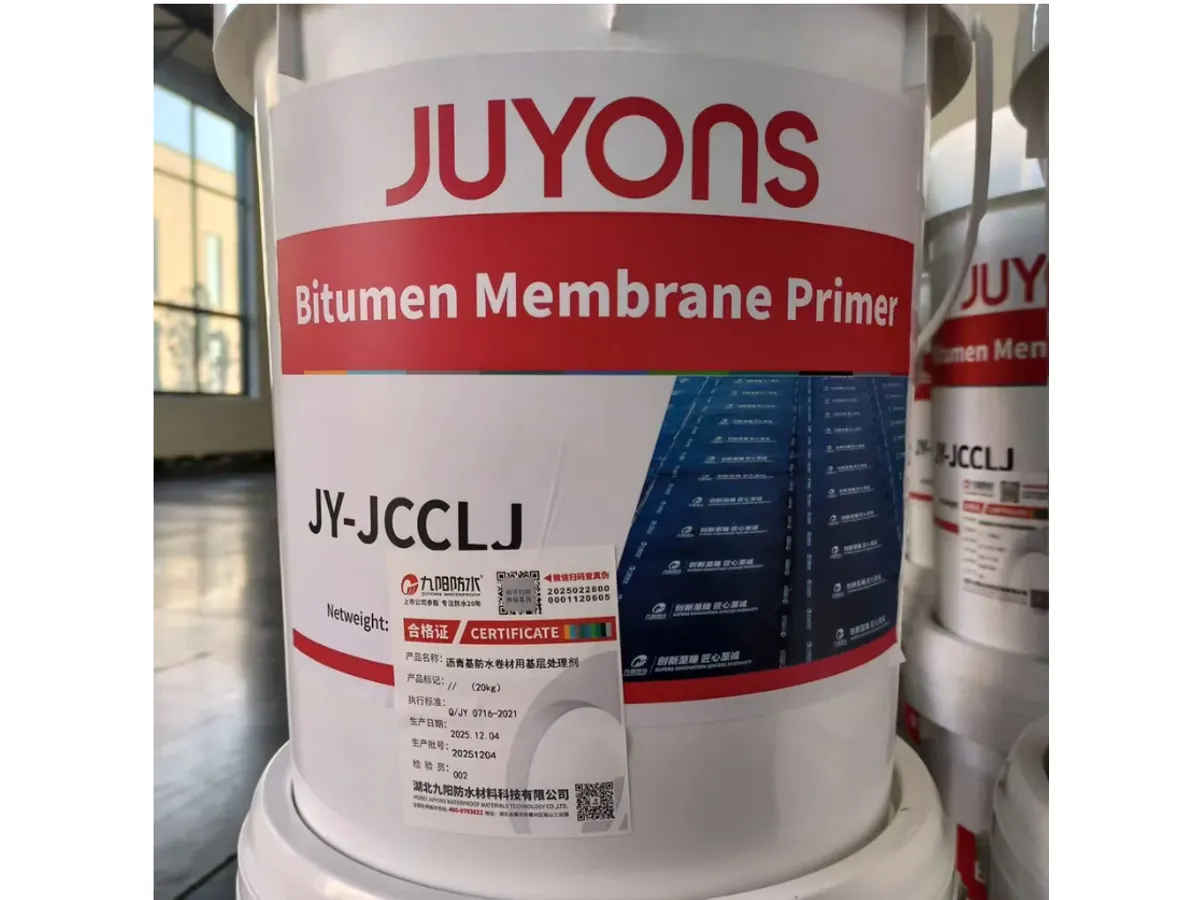
Water-Based Bitumen Primer for Waterproofing Membranes
20 kgWater-based primer brushed on the base before a bitumen membrane goes down.
Order on WhatsAppTZS 126,240perbucket
APP Torch-On Waterproofing Membrane, Mineral Finish
3 mm, 4 mmTorch-on APP roll with a mineral top for flat roofs, terraces and foundations.
Order on WhatsAppTZS 192,000perroll
K11 Polymer Cement Waterproof Coating (Two-Component)
18 kg/barrelBrush-on cement coating for bathrooms, kitchens, balconies, basements and pools; tiles can go over it.
Order on WhatsAppTZS 155,000perbucket
Dimple Drainage Membrane 8 mm with Geotextile (HDPE Drainage Board)
Studded drainage membrane that protects foundation walls below ground.
Order on WhatsAppTZS 328,000perroll
HDPE Geomembrane (Dam Liner), Smooth, 0.3 mm
Smooth0.3 mm0.3 mm HDPE sheet, ordered by Kitovu for damp proofing under floor slabs.
Order on WhatsAppTZS 1,052,000perroll



What bitumen paint is
Solid bitumen cannot be brushed, so paint makers carry it in a liquid that evaporates after application. There are two families, and the label tells you which one you hold.
Solvent-based bitumen paint. The Barrettine Black Bitumen Paint data sheet describes its product as medium-viscosity bitumen reduced with a C9–C12 petroleum hydrocarbon. It goes on glossy and weathers to a matt black film. Bird Brand states the same change from gloss to matt under sunlight for its black bituminous paint, which contains white spirit.
Water-based bitumen emulsion. Here fine droplets of bitumen are dispersed in water. The Bostik Aquaprufe data sheet (TDS00461) describes its product as a rubber-enriched bitumen emulsion (bitumen and rubber latex in an aqueous dispersion) that goes on dark brown and dries black.
Solvent paint and emulsion compared
The two products in the table come from the data sheets above. Figures belong to those products only; another brand will print its own.
| Solvent bitumen paint (Barrettine) | Bitumen emulsion (Bostik Aquaprufe) | |
|---|---|---|
| Carrier | petroleum hydrocarbon solvent | water, with rubber latex |
| Coverage | 4–6 m²/L on porous surfaces such as concrete; 10–12 m²/L on steel | 1.25 m²/L per coat on floors (0.8 L/m²); 2 m²/L per coat on walls (0.5 L/m²) |
| Coats | two recommended | at least two on floors; three on walls |
| Time between coats | 2–4 hours | about 24 hours per coat |
| Application temperature | 5°C minimum | +5°C to +30°C |
| Left exposed? | yes, as a protective coat | no — stays slightly tacky, must be covered by screed, plaster or board |
The difference in coverage is large. Our calculation for 20 m² of concrete wall: about 4 litres of the solvent paint per coat at 5 m²/L, against 10 litres of the emulsion per coat at 2 m²/L.
Where bitumen paint is used
The Barrettine sheet lists these uses for its solvent paint: corrosion protection of iron and steel, metal gutters and railings, below-ground fence posts, a barrier against water and water vapour on brick, block and stone, protection of buried concrete against groundwater, and lining of non-potable water tanks.
Bitumen emulsion works more as a hidden membrane. Bostik specifies Aquaprufe on floors as a damp-proof layer of at least two coats at 0.8 litres per m², laid at right angles to each other and covered with a sand-cement or concrete screed at least 50 mm thick; without that screed, the sheet says, it will not act as a damp-proof membrane. On walls it goes under plaster or render, three coats at 0.5 litres per m².
Bitumen emulsion is also sold as a primer for the surface under bitumen membranes. That job has its own page on bitumen primer. Kitovu stocks one such product in Zanzibar, the Water-Based Bitumen Primer for Waterproofing Membranes by JUYONS: a 20 kg bucket of polymer-modified emulsified bitumen, described on its label and listing as a substrate treatment before bitumen waterproof membranes are laid.
How bitumen paint is applied
These steps are those in the Barrettine data sheet for its solvent paint. An emulsion follows its own sheet — for Aquaprufe, a slightly damp surface and no thinning at all.
- Prepare a surface that is smooth, clean, dry and sound, free of oil, grease and condensation. The sheet allows application on fresh (“green”) concrete.
- On metal, wire-brush off rust first; for long-term protection, prime with a rust-inhibiting product.
- Apply by brush or roller. Do not pour onto a flat surface: it puddles and dries slowly.
- Thin only if the paint has thickened in storage — 5–10% white spirit by volume to start.
- Give a second coat 2–4 hours after the first, once a touch test shows the first is dry; laying it at right angles improves the result.
- Do not apply below 5°C.
What to check when you buy
- Solvent or water. The label or data sheet states the carrier. Bostik warns against putting solvent-based products onto its emulsion, so do not mix the two systems in one build-up.
- Drinking water. Barrettine states compliance with BS 6949:1991 for bitumen-based coatings for cold application, “excluding use in contact with potable water”, and lists the paint for non-potable tanks only. Unless a product’s own document approves contact with drinking water, keep it out of tanks you drink from.
- Roofs. The Barrettine sheet itself says “not suitable for use on roofing” in one place and lists overcoating aged felt roofs in another. When the label is unclear, ask the maker or choose a product sold for roofs.
- Coverage on the label. It decides how many tins you need: the two data sheets above range from 1.25 to 12 m² per litre.
- Must it be covered? If the sheet says the film stays tacky, it is a membrane for under screed or plaster, not a finish.
Questions
What is bitumen paint used for?
The Barrettine data sheet lists protecting iron and steel against corrosion, coating below-ground fence posts, sealing exposed and buried concrete, and lining non-potable water tanks. Water-based emulsions such as Bostik Aquaprufe are used as a damp-proof layer under a floor screed or wall plaster.
How should I apply bitumen paint?
On a clean, dry, sound surface, by brush or roller rather than poured. The Barrettine data sheet recommends two coats, the second 2–4 hours after the first and ideally at right angles to it, and no application below 5°C.