













































































































Roofing sheets (mabati): types, coatings and gauges
Published · Updated
Mabati are corrugated or profiled metal roofing sheets, mostly zinc-coated or aluminium-zinc-coated steel. The 2022 census counted 84.8% of Tanzanian households living under iron-sheet roofs. Before buying, compare the base metal, the coating mass, the thickness in millimetres and the profile, not only the gauge number.
In stock in Zanzibar
See all 11 products
APP Torch-On Waterproofing Membrane, Mineral Finish
3 mm, 4 mmTorch-on APP roll with a mineral top for flat roofs and terraces.
Order on WhatsAppTZS 192,000perroll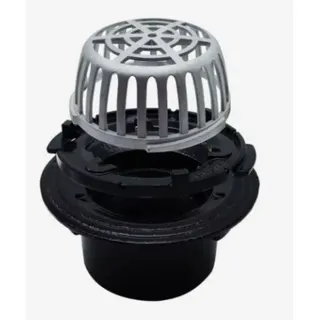
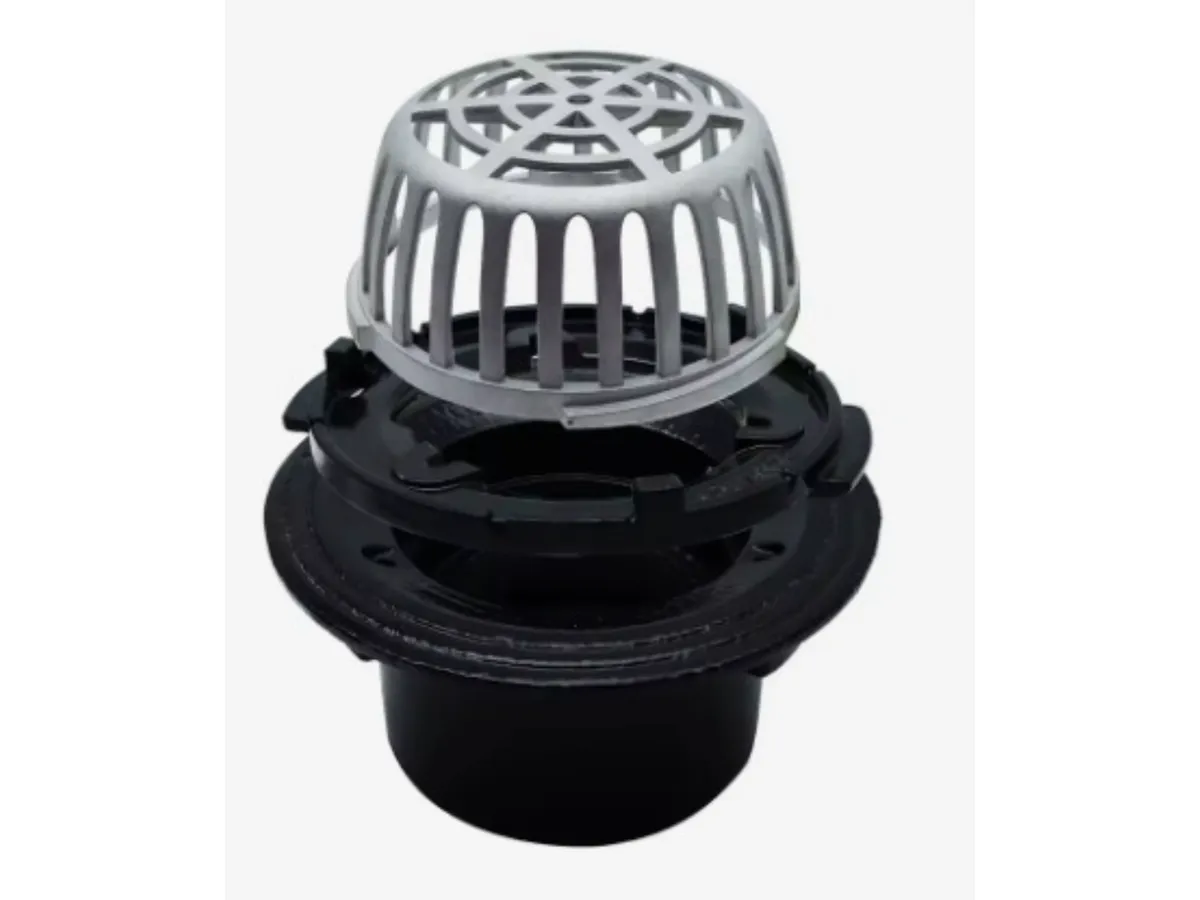
Flat Roof Drain with Dome Strainer for 110 mm Pipe
For 110 mm pipeOutlet for flat roofs and terraces, with a dome strainer, for 110 mm pipe.
Order on WhatsAppTZS 159,900perpiece
Water-Based Bitumen Primer for Waterproofing Membranes
20 kgBrushed on the roof deck before a bitumen membrane is laid.
Order on WhatsAppTZS 126,240perbucket
K11 Polymer Cement Waterproof Coating (Two-Component)
18 kg/barrelOrder on WhatsAppTZS 155,000perbucket




Mabati: what roofing sheets are
Roofing sheets (mabati) are thin steel or aluminium sheets rolled into waves or ribs, so that a sheet a fraction of a millimetre thick can span between purlins and shed rain. In Tanzania they are the default roof: the 2022 Population and Housing Census housing report found 84.8% of households under iron-sheet roofs, 96.2% in towns and 77.3% in rural areas. The Kiswahili edition of the census findings uses the word “Mabati” for this category, the same word buyers type into search (Matokeo Muhimu, April 2024).
The same housing report ties the roof to household income. Among the poorest fifth of households, 41.3% had iron-sheet roofs and 46.6% grass or leaves, the group that includes makuti thatch; in each of the three better-off fifths the iron-sheet share was between 97.5% and 99.2% (table 4.1).
Three things decide how a sheet behaves on a roof: the metal and its coating, the profile, and the thickness. The sections below take them one at a time and end with the questions to put to a seller.
Iron sheets by metal and coating
Most types of roofing sheets sold as “iron sheets” are in fact steel with a metal coating; “tin roofing sheets” is an everyday name, not a description of the metal. The coating is what keeps the steel from rusting, so it matters as much as the steel itself.
| Kind | What it is | What the source says |
|---|---|---|
| Galvanised steel | steel with a hot-dip zinc coating | zinc adds substantial protection; where the coating is damaged the steel rusts |
| Aluminium-zinc (aluzinc) coated steel | steel with a coating of about 55% aluminium, 43.5% zinc and 1.5% silicon | introduced in 1972; also sold under trade names such as Galvalume and Zincalume |
| Aluminium | corrugated aluminium sheet | lighter than galvanised steel but more expensive; never needs painting for protection; softer, so more likely to tear away in a heavy wind storm |
| Prepainted (colour) | galvanised or Al-Zn steel with a factory paint finish | ask for the metal coating mass under the paint, as for bare sheets |
Galvanised and aluminium-zinc coatings are compared by mass per square metre. GalvInfo explains that an AZ50 [AZM150] Al-Zn coating is about as thick, roughly 20 µm, as a G90 [Z275] zinc coating, but weighs 150 g/m² instead of 275 g/m² because the alloy is less dense. A lower number for Al-Zn is therefore not a thinner coating.
For aluminium roofing sheets, FAO notes a bright reflective surface that dulls after a year or more as the surface oxidises, a building that stays cooler than under galvanised sheets, and the same corrugation and sheet sizes as galvanised steel, so the two can be laid the same way.
Bare aluminium-zinc sheet has one handling issue worth knowing. GalvInfo reports that, without a clear resin coat, the forming rolls can leave black abrasion lines, and the handprints and boot marks of roofers can turn dark and stay visible for years. Some producers sell a resin-coated version for that reason, so ask which one is offered.
Corrugated, box and tile profiles
Corrugated iron sheets have rounded, evenly spaced waves. FAO says the nails for corrugated sheets go through the ridge of the corrugation, the top of the wave, to prevent leakage.
Box profile sheets (also called trapezoidal) have flat-topped ribs with wide flat pans between them. Tile profile sheets are pressed in steps so the finished roof looks like rows of clay tiles.
Corrugated roofing sheets and the other shapes are sold under many trade names. If a quote names a profile only by a code such as IT4 or IT5, ask for the profile drawing: cover width, rib height and rib spacing. Cover width, not sheet width, tells you how many sheets the roof needs, and the drawing is what the fundi (local builder) lays the purlins to.
Gauge and thickness: what the number means
Steel roofing sheets are often quoted by gauge, where a higher number means a thinner sheet. The gauge is a convention, not a measurement. On the US galvanised sheet scale used by Continental Steel, 28 gauge is 0.0187 in thick (0.475 mm) and weighs 3.81 kg/m²; the same page notes that galvanised gauge numbers run 0.0037 in (0.094 mm) thicker than the plain steel gauge of the same number. By our calculation from the 3.81 kg/m² figure, a 28 gauge sheet 3 m long and 1 m wide, a size taken only as an example, weighs about 11.4 kg.
Other price lists can attach a different thickness to the same gauge, and some quote the thickness with the coating and paint included, some without. For that reason, metal roofing sheets should be compared by thickness in millimetres and by coating mass in g/m², with the gauge as a label only.
FAO gives the working range: galvanised corrugated sheets are made from 0.3 mm to 1.6 mm thick, and 0.375–0.425 mm is the range it recommends for farm buildings. The same chapter allows 0.475 mm sheets a purlin spacing of up to 1,500 mm, which shows how thickness and purlin layout go together.
What to check in a quote for roofing sheets
A roof sheet quote is easy to compare only if every line answers the same questions. Ask the seller for:
- Base metal: steel or aluminium.
- Coating type and mass: zinc (for example Z275) or aluminium-zinc (for example AZ150), in g/m².
- Thickness in mm, and whether it is the base steel or the total with coating and paint.
- Profile name with its drawing: cover width, rib height, rib spacing.
- Sheet lengths available, so long rafters need fewer end laps.
- Colour and paint type for prepainted sheets.
- Matching ridge caps, flashings and fixings in the same metal and coating.
The last point matters on any roofing sheet: FAO notes that steel rusts where its coating is damaged, so fixings, cut edges and scratches are where corrosion starts.
Slope, laps and fixing
The metal roof works only if water cannot be driven uphill through the laps. FAO’s table for galvanised corrugated steel links the minimum slope to the end lap and to how exposed the site is:
| Site | Minimum slope | End lap |
|---|---|---|
| Sheltered | 1:5 | 150 mm |
| Sheltered or normal | 1:3 | 100 mm |
| Exposed | 1:3 | 150 mm |
Source: FAO, Farm structures in tropical climates, ch. 5, table 5.13. The same table sets side laps of one to two corrugations, depending on exposure.
On fixing, FAO says to place the nails in the ridge of the corrugation, at every second corrugation on the eave purlin under average conditions. Each nail hole goes through the coating, and the same chapter advises painting the sheet at the first signs of rust.
Heat, rain noise and coastal air
FAO lists two drawbacks of galvanised sheets: they are noisy in heavy rain and as they move with temperature, and they insulate poorly. Its remedy for both is an insulated ceiling under the roof. The same source notes that the sheets are not attacked by termites or fungus, an advantage over thatch and timber.
Near the sea, the choice of coating counts most. In exposure tests summarised by GalvInfo, a zinc coating corroded 3.8 times as fast as a 55% aluminium-zinc coating of similar thickness at a site 25 m from the ocean, and 8.2 times as fast at a site 250 m from it. These are ratios from one test programme in the United States, not a service-life promise for any sheet, but they explain why coastal buyers ask about the coating first.
Roofing sheets in Zanzibar
The census figures for the islands differ from the mainland: our page on roofing sheets (mabati) in Zanzibar sets out the island numbers by region. For parts of a building with a flat concrete roof instead of sheets, see waterproofing membranes and the flat roof drain page.