













































































































White cement: how it differs from grey and where it goes
Published · Updated
White cement behaves like grey cement in every way except colour, says Aalborg Portland's White Guide. The colour depends on metal oxides, above all iron and manganese, so it is made from raw materials low in them. Its product, for example, is a CEM I 52.5 R.
In stock in Zanzibar
See all 11 products
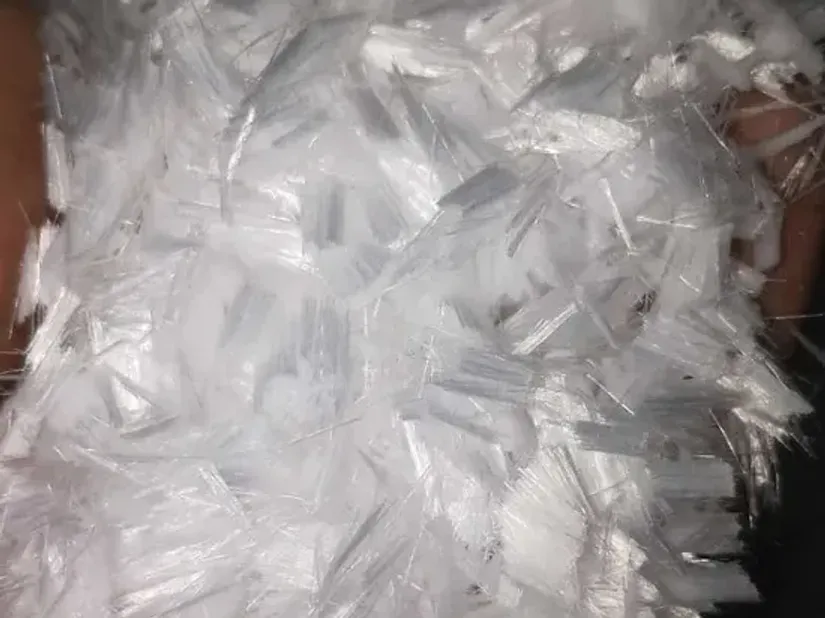
Polypropylene Fibre for Concrete and Mortar
Added to concrete and mortar mixes to limit plastic shrinkage cracks.
Order on WhatsAppTZS 15,100perkg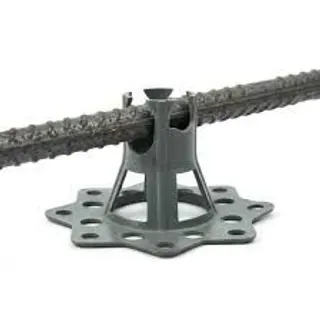
Plastic Rebar Chairs with Base (Rebar Spacers)
Plastic chairs that hold rebar at the right cover while concrete is poured.
Order on WhatsAppTZS 2,630perpiece
K11 Polymer Cement Waterproof Coating (Two-Component)
18 kg/barrelOrder on WhatsAppTZS 155,000perbucket




What white cement is
White cement is a Portland cement made to be white, not grey. In The White Guide, white cement maker Aalborg Portland explains that it binds sand and gravel into mortar, plaster and concrete in the same way as ordinary cement. The difference lies in the raw materials and the burning: metal oxides, mainly iron and manganese, decide how white the powder is and what undertone it has.
The guide lists limestone, sand and gypsum as the main raw materials, with kaolin or other alumino-silicates crushed and blended in. The slurry is burnt to clinker at close to 1,500°C and cooled rapidly.
White and grey cement side by side
| Point | White cement | Grey cement |
|---|---|---|
| What it does | binds mortar, plaster and concrete | the same |
| Example type and class | Aalborg White: CEM I 52.5 R | e.g. Twiga Ordinary: CEM I 42.5N |
| Whiteness stated | Y-reflection 85.0–89.5% for Aalborg White (January 2006 data) | not given |
| Typical use | visible and decorative work | structural concrete, blocks, plaster |
Read the table as a comparison of two named products, not of all brands. Strength classes of white cements vary by maker, and the class should be checked on the bag, as with grey cement types and grades.
Where white cement is used
The White Guide lists where white cement is used: precast elements made in factories, bricks, blocks and tiles, terrazzo floors polished until the stone shows, and garden pieces such as benches and fountains. Its main draw is colour: with pigments added, white cement gives clean, bright shades, especially light pastels, and two or more pigments can be combined.
Two practical points from the same guide apply on any site. Coloured concrete with pigment should be mixed longer than usual to avoid streaks. And the mixer and tools that touch the mix should be clean, particularly of oil and grease, or the finish will show it; drum types and batch sizes are compared under concrete mixers.
White cement in wall putty
Wall putty is the smooth undercoat between rough plaster and paint, and some putties use white cement as the binder. Asian Paints describes its Asian Wall Putty as a white cement based product with a redispersible polymer, made for rough interior and exterior plaster. Its data sheet sets out the steps:
- Let new plaster cure; the sheet recommends 28 days.
- Sand the surface, wipe it clean and wet it before the first coat.
- Apply the first coat with a putty knife or trowel, and the second after 6–8 hours.
- Finish with a primer and 2–3 coats of emulsion paint.
The sheet gives a coverage of 10–15 sq ft per kg for up to 1.5 mm in two coats, which by our calculation is about 0.9–1.4 m² per kg (1 sq ft = 0.0929 m²). For holes and dents it suggests white cement and fine sand mixed 1:3, not the putty itself, and it lists packs of 1, 5, 20 and 40 kg. Walls lined with boards instead of plaster and putty are covered under PVC boards and wall panels.
What to check when you buy white cement
- Type and class. The bag or data sheet should state them, just as for grey cement.
- Whiteness figure. Makers that publish one give it as reflectance; Aalborg’s is the Y-reflection quoted above.
- Packaging. Aalborg’s storage advice keeps bags on pallets with the plastic wrapping unbroken until use, dry and off the floor.
- Lumps. The same advice says cement with stony lumps should not be used, because its strength can no longer be guaranteed.
- For putty, the shelf life. Asian Paints gives one year from manufacture in the original sealed sack.
Kitovu does not sell white cement or wall putty; other finishing materials are listed under hardware and building materials.