













































































































Sliding doors: types, pocket doors and locks
Published · Updated
Sliding doors open by moving along a track instead of swinging on hinges, so they need no floor space in front of them. Sizes vary widely: the Spanish system maker Strugal rates its lift-and-slide sashes at up to 3,300 × 3,300 mm and up to 400 kg each with extra trolleys.
In stock in Zanzibar
See all 11 products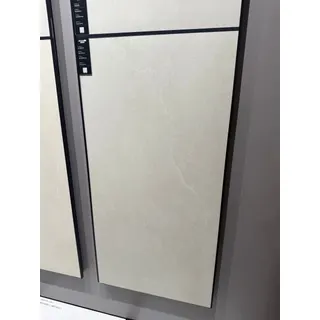
Beige Porcelain Tile 1200x600 mm, Matt Anti-Slip R10
1200 × 600 mmR10Order on WhatsAppTZS 49,680pertile
K11 Polymer Cement Waterproof Coating (Two-Component)
18 kg/barrelOrder on WhatsAppTZS 155,000perbucket






What sliding doors are
A sliding door leaf, or sash, moves sideways on rollers or trolleys along a track instead of turning on hinges. Nothing swings into the room, so furniture can stand close to the opening, and wide openings can be filled with large glazed panels. The trade-off is that the track, the rollers and the lock carry the whole weight of each panel and take the wear.
Sliding doors are made in aluminium, uPVC and timber. The frame material is chosen the same way as for a hinged door; our pages on aluminium doors and PVC doors cover what to check in each profile.
Types of sliding doors
| Type | How it moves | Where it is used |
|---|---|---|
| Standard sliding (patio) door | panels roll past each other on a floor track | balconies, patios, terraces |
| Lift-and-slide door | the handle lifts the sash off its seals before it slides | wide, heavy glazed openings |
| Pocket door | the leaf slides into a cavity inside the wall | bathrooms, small rooms, corridors |
| Surface-mounted sliding door | the leaf hangs from a rail fixed above the opening, in front of the wall | interiors where the wall cannot be opened up |
Lift-and-slide doors for wide openings
Lift-and-slide is the heavy end of modern sliding doors. Turning the handle raises the sash onto its trolleys so it moves freely, and lowering it presses the sash back onto the seals. The figures from one manufacturer show the scale. Strugal lists its ILEVA lift-and-slide system with:
- sashes up to 3,300 mm wide and 3,300 mm high;
- up to 300 kg per sash with its LS400 fitting, or 400 kg with additional trolleys;
- a 150 mm deep frame and 32 or 42 mm thick glazing;
- air permeability class 4, watertightness class 9A and wind resistance class C2.
A sash of that weight needs a level, solid sill to run on. Ask for the weight of each sash when you compare quotes.
Pocket doors: what the wall must take
Pocket doors disappear into the wall, so the wall has to be built around a steel or timber cassette. The ECLISSE size chart for its Classic single pocket door system shows the requirements for one fire-rated model:
| Item | ECLISSE Classic single FD30 |
|---|---|
| Door leaf thickness | 44 mm |
| Finished wall thickness | 100 mm (frame 75 mm) |
| Door leaf sizes | 626–926 mm wide, 2,040 mm high |
| Overall frame for a 626 mm leaf | 1,294 × 2,120 mm |
| Maximum leaf weight | 100 kg |
| Soft-close device | for leaves up to 40 kg |
The overall frame for a 626 mm leaf is more than twice the leaf width (our calculation: 1,294 ÷ 626 = 2.07), so a pocket door needs a stretch of clear wall beside the opening with no pipes or cables in it.
Lockable sliding door: how the lock works
A hinged door’s bolt shoots straight into the frame; a sliding door can be lifted off its track or pushed sideways, so its lock works differently. Yale’s Pinnacle sliding door lock, listed by ASSA ABLOY New Zealand, shows the features to look for:
- a hookbolt that hooks into the strike, with an anti-lift feature between lock and strike;
- a deadbolt as well as the hook;
- anti-slam protection, so the hook is not damaged if the door is pushed shut hard;
- a choice of backset, 30, 35 or 40 mm, to suit the stile, and an adjustable strike;
- a stated test load: 4 kN forced entry and 100,000 latching cycles.
It comes with a cylinder on both sides or a cylinder outside and a turn inside. The lock is mortised into an aluminium stile, so it has to be chosen with the profile. For cylinders and how to measure them, see our page on door locks.
What to check when you buy
- The type: standard sliding, lift-and-slide, pocket or surface-mounted.
- The weight of each sash or leaf, and the rated load of the rollers or trolleys.
- The track: floor track or top rail, and how it drains water on an outside door.
- For a pocket door, the finished wall thickness and the length of clear wall beside the opening.
- The lock: hookbolt, anti-lift feature and backset.
- The frame material and its finish.
Kitovu does not make or sell doors; it sells building materials from stock in Zanzibar.
Questions
Are sliding doors as secure as other door types?
It depends on the lock. A sliding door needs a lock made for sliding: Yale's Pinnacle lock, for example, uses a hookbolt with an anti-lift feature and a deadbolt, and is rated for a 4 kN forced-entry load.