













































































































Dimple membrane for wall and green roof drainage
Published · Updated
A dimple membrane is a stiff plastic sheet, usually HDPE, pressed into rows of studs and often faced with a filter fabric. Laid against a wall or on a roof slab, it keeps soil off the waterproofing and gives water a free path to a drain. One maker's data sheet lists 8 mm dimples.
In stock in Zanzibar
See all 11 products
Dimple Drainage Membrane 8 mm with Geotextile (HDPE Drainage Board)
8 mm studded HDPE drainage membrane for foundation walls.
Order on WhatsAppTZS 328,000perroll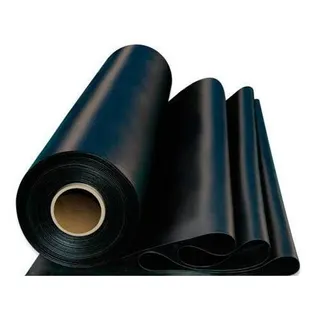
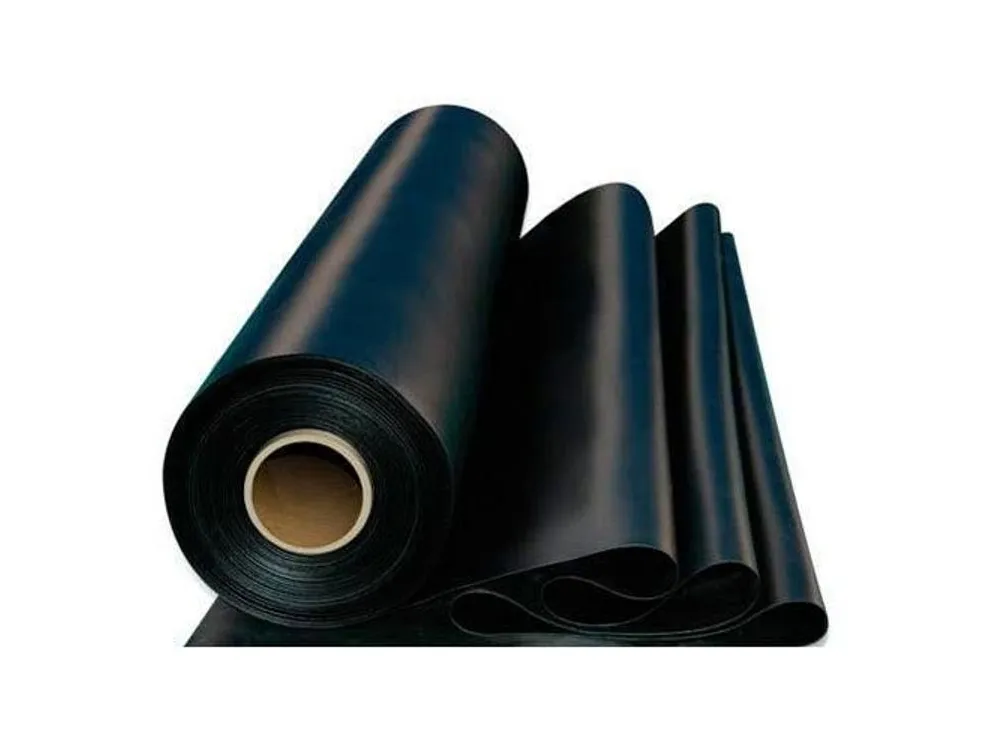
HDPE Geomembrane (Dam Liner), Smooth, 0.3 mm
Smooth0.3 mmSmooth black 0.3 mm HDPE sheet in 4 × 100 m rolls for ponds, reservoirs and damp proofing.
Order on WhatsAppTZS 1,052,000perroll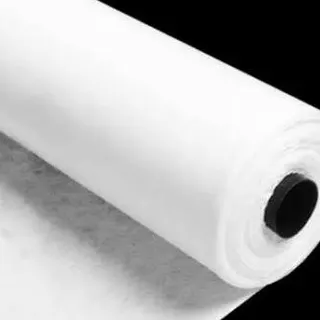
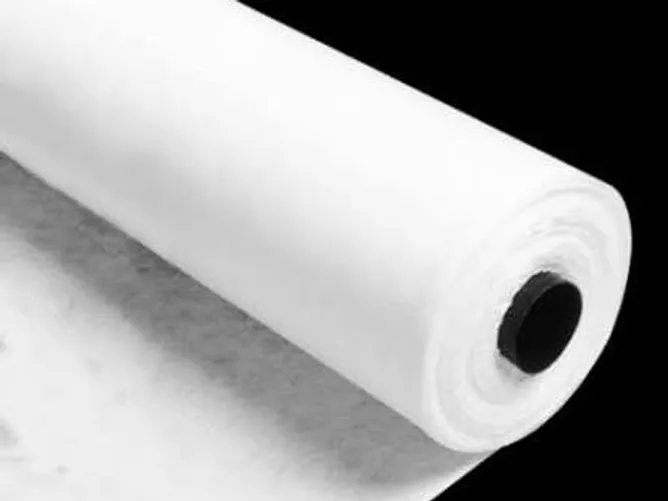
Non-Woven Needle-Punched Polypropylene Geotextile 200 g/m²
200 g/m²200 g/m² polypropylene fabric that separates, filters and protects layers in roads, drains and under liners.
Order on WhatsAppTZS 526,000perroll

K11 Polymer Cement Waterproof Coating (Two-Component)
18 kg/barrelOrder on WhatsAppTZS 155,000perbucket



What a dimple membrane is
A dimple membrane — also sold as dimpled membrane, dimple board or drainage board — is a sheet of rigid plastic formed into thousands of small studs. The studs hold the sheet a few millimetres off the surface behind it, and the gaps between them become channels for water and air. Some versions carry a non-woven geotextile on the stud side, which lets water in and keeps fine soil out.
The PM DRAIN-TEC 400 data sheet of the maker PMI-Plast describes a typical build: an HDPE dimpled sheet with 8 mm studs, about 1,710 of them per square metre, and a polypropylene geotextile on top. The maker says the double layer protects the waterproofing below from mechanical damage.
Dimple board, drainage mat or drainage cell?
Three products turn up under the same searches. They do the same job — move water sideways to a drain — but at different scales.
| Product | What it looks like | Where it is used |
|---|---|---|
| Dimple membrane / drainage board | roll of HDPE sheet with studs, often with geotextile | basement and retaining walls, roof decks, patios |
| Drainage mat | dimpled sheet with geotextile, laid flat on a sealed deck | green roofs, terraces, roofs over car parks |
| Drainage cell | stackable plastic module with a honeycomb-like structure, polypropylene or polystyrene | roof gardens, planters, playing fields, under paving |
A drainage membrane on a wall is a thin layer of a few millimetres. A drainage cell is a load-bearing module; Strata Global says it keeps water moving even under higher compressive loads.
Retaining wall and basement drainage
Retaining wall drainage and foundation drainage serve one purpose: Strata Global names limiting hydrostatic pressure and moisture getting in. A dimple sheet against the back face of the wall gives water a path down to a drain. The PMI-Plast instructions for vertical laying:
- Lay the sheet from top to bottom with the geotextile facing the soil.
- Keep the upper edge about 15 cm above the waterproofing.
- Overlap neighbouring sheets at the sides; close the run by overlapping the last sheet on the first by at least 30 cm.
- Hold the sheet temporarily with battens; after backfilling, earth pressure keeps it in place.
- Rest the lower end on a perimeter drain bedded in at least 15 cm of filter gravel, then cut the sheet off at ground level.
For the reinforcement built into reinforced-soil retaining walls, see geogrid.
Green roof drainage
On a flat roof under soil or gravel, the same sheet works lying down. Drainage for green roof build-ups needs both a free path for water and a filter that stops the soil washing into it. PMI-Plast’s rules for horizontal laying: a fall of at least 2% on the surface below, geotextile facing up, edges turned up at least 15 cm against walls and parapets, and sheets extended by pushing the next one under by at least 20 cm. The maker allows wheelbarrows directly on the laid sheet, and wheel loaders only once at least 20 cm of fill covers it.
Water then has to leave the roof through an outlet. A roof outlet with a dome strainer keeps leaves and gravel out of the pipe — see roof drains for flat roofs.
What to check on the data sheet
Dimple membranes look alike in photos; the data sheet is what separates them. Using the PMI-Plast sheet as an example of what to look for:
- Stud height — 8 mm on that product.
- Compressive strength — about 400 kN/m² (roughly 40 t/m², as the maker puts it). This matters under deep backfill or vehicle traffic.
- In-plane flow capacity — how much water the sheet carries per metre width. PMI-Plast gives about 0.19 to 0.37 l/s·m at 20 kPa on gentle falls of 1–3%.
- Geotextile — whether there is one, its opening size and permeability.
- Temperature range — −30°C to +80°C on that sheet.
- Roll width and length — PMI-Plast makes widths from 0.5 to 2.5 m.
These are values for one product, given here to show what a complete data sheet contains.
Dimple drainage membrane in Zanzibar
Kitovu lists a Dimple Drainage Membrane 8 mm with Geotextile (HDPE Drainage Board) in stock in Zanzibar. Kitovu’s stock records give this dimpled membrane in rolls 2 m wide and 20 m long, 40 m² per roll. Its maker and full specifications are still being confirmed, so the PMI-Plast figures above do not describe it. The price per m² and per roll is on the product card; ask on WhatsApp for other details.
Questions
What is dimple board and how does it protect a basement wall?
It is the same studded sheet, fixed with the studs against the waterproofed wall. Water reaching the wall runs down the channels between the studs to a gravel-wrapped drain at the foot, so it does not build up against the waterproofing.
When is a drainage mat used?
Where water must leave a flat surface under a heavy cover: green roofs, roofs over car parks, patios and terraces. PMI-Plast asks for a fall of at least 2% under its mat.
How is a drainage cell installed?
Strata Global gives the steps: clear and level the base, cover it with geotextile fabric pegged down, then lay the cells as one continuous layer with no gaps, checking levels as you go.