Dimple Drainage Membrane 8 mm with Geotextile (HDPE Drainage Board)
Specs checked on
What it is
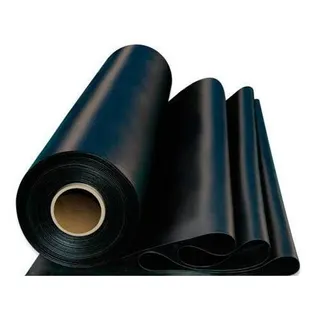
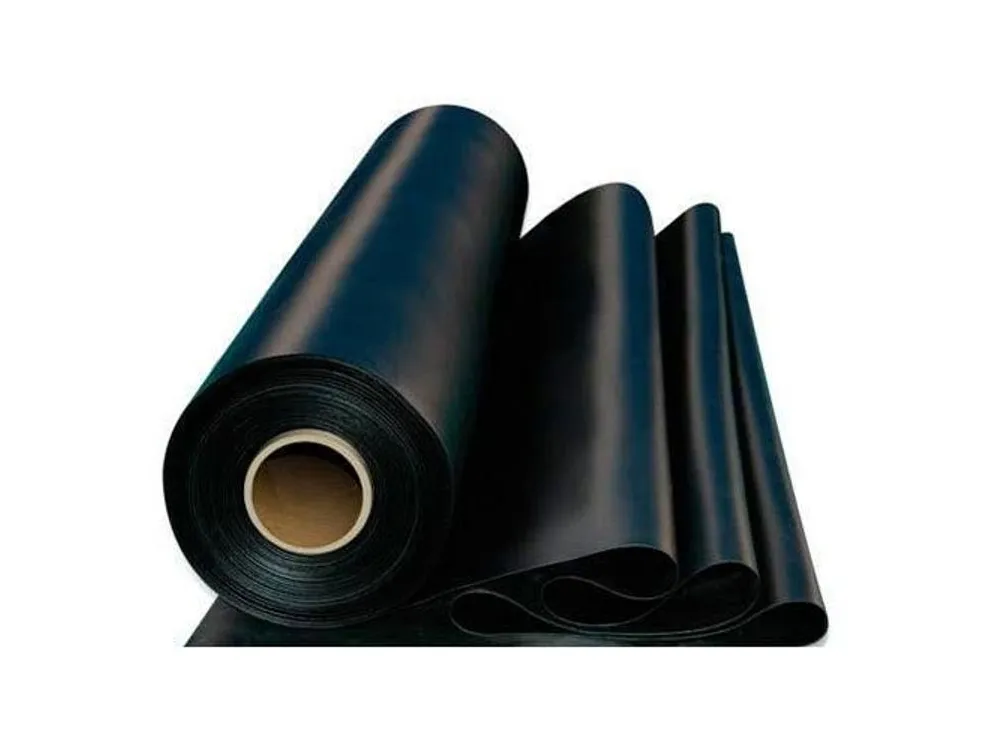
A dimple drainage membrane is a plastic sheet pressed into rows of small studs. Set against a wall, the studs hold a gap open, so water that seeps through the backfill runs down to a drain instead of standing against the waterproofing. Kitovu ordered this one for foundation walls, laid vertically.
The gallery shows a black studded sheet on a roll, sheets laid out on a slab, and one sheet fixed to a foundation wall under a profile strip, with gravel at its foot. None of these pictures shows a fabric layer. The geotextile face and the 8 mm stud height in the product name are therefore still being confirmed with the supplier, as is the maker.
Until then, only other makers’ data are available. On the PM DRAIN-TEC 400 data sheet, PMI-Plast describes a drainage board with geotextile: an 8 mm HDPE dimple sheet with polypropylene fabric bonded to the studs. The fabric filters the water and stops fine soil from silting up the channels, while the flat back spreads the load over the sealing behind it. PMI-Plast gives about 400 kN/m² in compression and a range of −30°C to +80°C; both are figures for a similar product, not confirmed for this item. Boards, mats and drainage cells are compared on the dimple drainage membrane page.
| Parameter | Value |
|---|---|
| Type | Dimple (studded) drainage membrane with geotextile layer |
| Dimple height | 8 mm |
| Colour | Black |
| Sheet material | HDPE |
| Weight | 500 g/m² |
| Roll width | 2 m |
| Roll length | 20 m |
| Roll area | 40 m² |
| Intended application (owner's order) | Foundation wall protection, vertical |
Need a figure that is not listed? Ask on WhatsApp.
Specs of similar products — not confirmed for this item
| Parameter | Similar products list |
|---|---|
| Geotextile material | Polypropylene |
| Geotextile weight | 200 g/m² |
| Sheet thickness | 0.5–1.8 mm, depending on grade |
| Compressive strength | Approx. 400 kN/m²; other similar products: at least 150 kPa at 20 % compression, 200–350 kPa by grade |
| Number of dimples | Approx. 1,710 per m² |
| Air volume between dimples | Approx. 5.5 l/m² |
| In-plane water flow | Approx. 2.72 l/s·m at 20 kPa, i = 1.0 |
| Geotextile opening width / permeability | Approx. 170 µm; approx. 100 × 10⁻³ m/s (EN ISO 11058) |
| Temperature resistance | −30 °C to +80 °C; another similar product: no cracking at −40 °C |
| Other properties (analog) | Chemical-resistant; resistant to bacteria and fungi, rot-resistant, root-proof; fire behaviour class E |
| Reference standard (analog) | DIN EN 13252 |
| Typical uses (analog) | Outer basement walls, earth-covered roofs of underground car parks, patios, green flat roofs; vertical and horizontal drainage |
| Laying side | Geotextile faces the soil or backfill; the smooth side faces the waterproofing |
How it is used
For a basement or foundation wall, PMI-Plast gives these steps for its PM DRAIN-TEC 400; they are written for a similar product and are not confirmed for this item.
- Cut sheets across the roll to the wall height and hang them from the top down, geotextile facing out towards the soil.
- Let each sheet stand roughly 15 cm higher than the waterproofing. Overlap neighbouring sheets, lifting the fabric at each joint, and close the run with an overlap of at least 30 cm.
- Fix the sheets only for the time being, with wooden battens for example, since the backfill will later press them to the wall.
- Stand the bottom edge on the drain pipe that runs round the building, which PMI-Plast wants wrapped in no less than 15 cm of gravel that will not wash into it. Trim the top at soil level when the trench is full.
The studded sheet protects the wall’s waterproofing but does not replace it. For that layer, Kitovu stocks the APP Torch-On Waterproofing Membrane, Mineral Finish, a torch-on bitumen roll that Kitovu offers for foundations as well as flat roofs and terraces. The gravel-and-pipe drain at the foot of the wall is explained in the French drain guide.
Also in stock


K11 Polymer Cement Waterproof Coating (Two-Component)
18 kg/barrelOrder on WhatsAppTZS 155,000perbucket
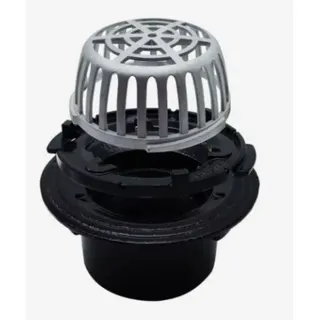
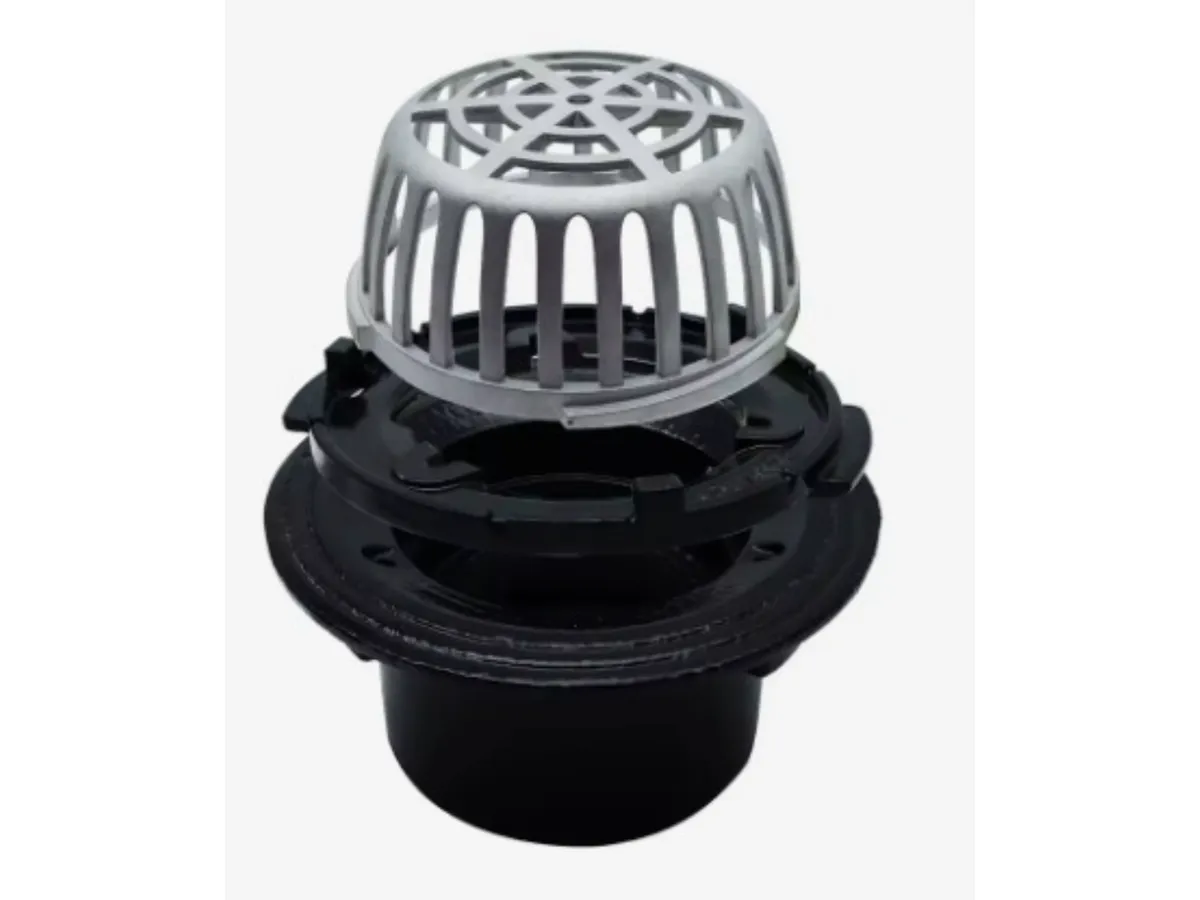
Flat Roof Drain with Dome Strainer for 110 mm Pipe
For 110 mm pipeOrder on WhatsAppTZS 159,900perpiece