













































































































Soakaway pit: how it works and what it is built from
Published
A soak pit, or soakaway, is a covered pit with porous walls that lets settled wastewater or greywater seep into the soil. Eawag's design guidelines place it at least 30 m from a groundwater source, with its bottom at least 1.5 m above the water table. It is not built for raw sewage: a septic tank comes first.
In stock in Zanzibar
See all 11 products
Non-Woven Needle-Punched Polypropylene Geotextile 200 g/m²
200 g/m²Order on WhatsAppTZS 526,000perroll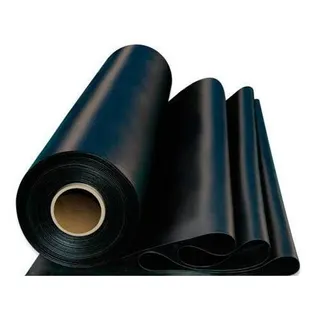
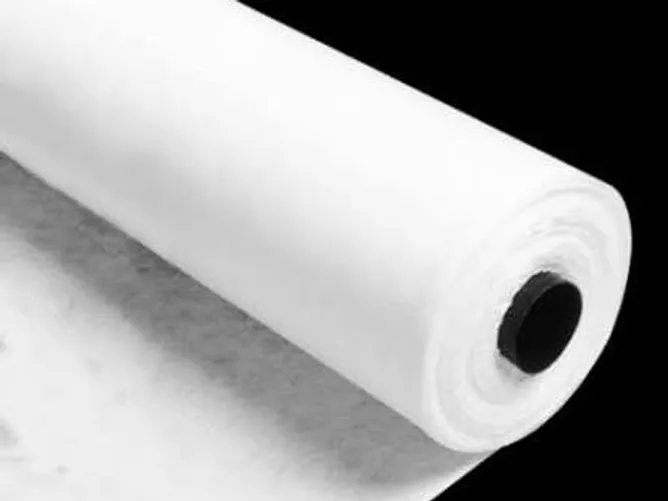
HDPE Geomembrane (Dam Liner), Smooth, 0.3 mm
Smooth0.3 mmHDPE liner for ponds, water pans and reservoirs.
Order on WhatsAppTZS 1,052,000perroll
K11 Polymer Cement Waterproof Coating (Two-Component)
18 kg/barrelOrder on WhatsAppTZS 155,000perbucket




What a soak pit is and what goes into it
A soakaway pit is a dug pit, covered on top, whose walls let water through. The SSWM factsheet on soak pits, adapted from Eawag’s Compendium of Sanitation Systems and Technologies, describes it as the last step after a treatment unit: effluent that has already settled in a septic tank, a biogas settler or a similar tank runs into the pit and filters away into the ground.
Three kinds of water are routed this way:
- liquid from a septic tank — the common septic tank and soak pit pair;
- greywater from showers, sinks, kitchens and laundry;
- rainwater from roofs and paving, which a stormwater soakaway handles.
The factsheet is clear that a soak away pit is not a treatment system for raw wastewater: solids would block the soil within a short time.
Where a soakaway pit can go
The site decides more than the design. Eawag’s Soak Pit Design Guidelines in Humanitarian Contexts set two distances: at least 30 m from a groundwater source, and a pit bottom at least 1.5 m above the water table in most soils. The SSWM factsheet adds that the pit should stay out of flood-prone ground and away from high-traffic areas, so that the soil over it is not compacted.
Soil is the other limit. The same factsheet wants ground that absorbs well and rules out clay, hard-packed and rocky soil. For a rainwater soakaway, the Edmonton utility EPCOR asks for at least 3 m between the pit and building foundations in its soakaway rebate rules.
Sizing: wall area from flow and soil
Eawag’s guidelines size a pit from two numbers: the daily flow Q in litres and the hydraulic loading rate of the soil in litres per square metre per day. Wall area = Q ÷ loading rate. Only the side walls count, since the bottom clogs first. For pre-treated wastewater the guidelines give these rates:
| Soil | Loading rate, pre-treated wastewater (L/m²/day) |
|---|---|
| Gravel, coarse sand | not suitable |
| Coarse to medium sand | 50 |
| Fine sand, loamy sand | 30 |
| Sandy loam, loam | 25 |
| Loam, porous silt loam | 20 |
| Silty clay loam, clay loam | 8 |
| Clays, colloidal clays | not suitable |
Source: Eawag, Soak Pit Design Guidelines in Humanitarian Contexts, Table 1. The guidelines also give a percolation test to place your soil in this table.
Worked example, our calculation. Say a septic tank releases 500 litres a day into sandy loam. 500 ÷ 25 = 20 m² of wall. A pit 2 m across has a circumference of 2 × 3.14 = 6.28 m, so it needs 20 ÷ 6.28 ≈ 3.2 m of open wall, plus the sealed top section described below. The 500 litres is an assumed figure; measure or estimate your own flow.
Typical dimensions in the same guidelines: lined pits 1–2.5 m in diameter and 1.5–5 m deep; unlined pits 1–2.5 m across and 1.5–3 m deep.
Materials: lined and unlined soak pits
Stable soil can be left unlined; loose soil needs a perforated wall. Either way the inside is usually filled with stone, which spreads the water, holds the walls up and gives bacteria more surface, as the Eawag guidelines explain.
| Part | What it does | Figure from the guidelines |
|---|---|---|
| Lining: bricks, blocks, concrete, drums or tyres | holds a loose pit open | holes at least 1.5 cm across, no more than 20 cm apart |
| Sealed top section | keeps surface run-off and rodents out | top 50 cm fully lined |
| Stone and gravel fill | spreads water, supports walls | stones 5–25 cm across |
| Gravel ring outside the lining | keeps the gap between wall and soil open | 0.3 m wide |
| Sand and fine gravel on the bottom | spreads the inflow | layer across the floor |
| Lid | blocks access and rainwater | concrete, usually 5 cm thick, two handles |
| Raised backfill around the top | sheds rainwater away | 30 cm high |
| Inlet pipe with tee | brings the water into the pit | — |
| Non-woven filter fabric around the fill | keeps soil and silt out of the stones | all sides wrapped (rainwater pits) |
The filter fabric line comes from EPCOR’s rules for rainwater soakaways, which ask for every side to be wrapped and recommend non-woven fabric. Eawag’s guidelines for greywater pits do not mention it.
Septic tank to soak pit: settle first
Everything that clogs the soil should stay out of the pit. The SSWM factsheet calls primary treatment a precondition, and Eawag’s guidelines name fats, oils, grease and solids as the main threat in greywater. For kitchen and washing water they recommend a solids filter, a grease trap or a settling tank upstream, with the grease trap cleaned about once a month.
Maintenance and lifespan
A soak pit that is sized well should need maintenance only every three to five years, according to both sources. When it starts to overflow, the usual cause is clogging or more water than the design allowed: the fill is dug out and cleaned, or replaced with fresh gravel. The pit lid should stay removable for that reason.
Geotextile in stock in Zanzibar
Kitovu sells a Non-Woven Needle-Punched PP Geotextile 200 g/m² from stock in Zanzibar: white, needle-punched polypropylene, 200 g/m². For how separation and filter fabrics differ by weight and weave, see our page on geotextile.
Questions
What is a soakaway and how does it work?
It is an underground pit with open walls or a stone fill. Water from a septic tank, a washing area or a roof enters through a pipe, fills the gaps and seeps out through the side walls into the surrounding soil.
Do all septic tanks need a soakaway?
A septic tank only settles solids; the liquid that leaves it still has to go somewhere. The SSWM factsheet lists the soak pit as one way to discharge that pre-settled effluent into the ground, where soil and groundwater allow it.
How to calculate the size of a soakaway pit?
Divide the daily flow in litres by the loading rate of your soil in litres per square metre per day. The result is the wall area needed; Eawag's guidelines count only the walls because the bottom clogs quickly.