













































































































Geogrid for roads, yards and retaining walls
Published · Updated
A geogrid is a plastic sheet punched and stretched into an open grid. Laid under gravel, its apertures lock the stones together and spread wheel loads; laid in layers inside a fill, it reinforces walls and slopes. Tensar's biaxial geogrids for roads and working platforms are made at 20, 30 and 40 kN/m.
In stock in Zanzibar
See all 11 products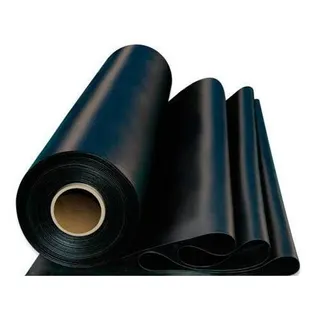
HDPE Geomembrane (Dam Liner), Smooth, 0.3 mm
Smooth0.3 mmSmooth black 0.3 mm HDPE sheet in 4 × 100 m rolls for ponds, reservoirs and damp proofing.
Order on WhatsAppTZS 1,052,000perroll
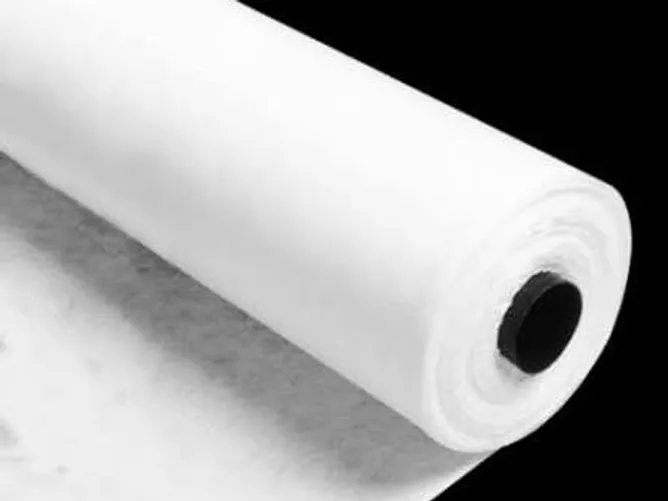
Non-Woven Needle-Punched Polypropylene Geotextile 200 g/m²
200 g/m²200 g/m² polypropylene fabric that separates, filters and protects layers in roads, drains and under liners.
Order on WhatsAppTZS 526,000perroll
Dimple Drainage Membrane 8 mm with Geotextile (HDPE Drainage Board)
8 mm studded HDPE drainage membrane for foundation walls.
Order on WhatsAppTZS 328,000perroll

K11 Polymer Cement Waterproof Coating (Two-Component)
18 kg/barrelOrder on WhatsAppTZS 155,000perbucket



What a geogrid is
A geogrid is an open mesh of stiff plastic ribs with large square or rectangular holes, called apertures. Tensar makes its biaxial geogrid by extruding a polypropylene sheet, punching holes in it and drawing it out in two directions until the ribs are stretched and stiff, according to its biaxial geogrid flyer.
The grid does nothing on its own. It works once crushed stone is spread over it: the stones settle into the apertures, lock against the ribs and stop sliding apart under a wheel. That is the difference between a geogrid and a geotextile — one holds aggregate, the other separates and filters.
Biaxial and uniaxial geogrids
Geogrids come in two main forms, named after the directions in which they carry load.
| Biaxial geogrid | Uniaxial geogrid | |
|---|---|---|
| Strength | in both directions of the roll | mainly along the roll length |
| Material (Tensar) | polypropylene, square apertures | high-density polyethylene (HDPE) |
| Typical jobs | roads, yards, working platforms, foundations on weak soil | retaining walls, steep slopes, bridge abutments, embankment bases |
| Example range | Tensar SS20, SS30, SS40: 20, 30 and 40 kN/m tensile strength | Tensar RE series |
Sources: Tensar biaxial flyer; Tensar uniaxial (RE) geogrid page.
The same Tensar flyer lists biaxial rolls 4 m wide in 30, 50 and 75 m lengths, and 3.8 m wide in 50 m lengths. Tensar claims a design life of 120 years for its uniaxial grids in reinforced soil; that figure is the maker’s statement.
Where geogrid is used
- Gravel roads, yards and parking. On soft ground, a biaxial geogrid under the base course holds the stone layer together. Tensar lists road and traffic areas, working platforms, airfield runways, railway track beds and embankments.
- Retaining walls and slopes. Uniaxial geogrid is laid in horizontal layers inside compacted fill, so the soil and grid act as one block — what engineers call mechanically stabilised earth. Tensar names retaining walls, steep slopes and bridge abutments.
- Foundations on weak soil. Tensar lists reinforced foundations among the uses of its biaxial range.
How many layers, what strength and what spacing a wall or slope needs is a design calculation. The figures on this page describe products, not designs.
Geogrid, geotextile or geocell?
Searches for geogrid also bring up a third product. Tex Delta, a maker of geotextiles, sells under the geogrid name a honeycomb mesh made of strips of non-woven geotextile joined into cells. It opens out like an accordion, is filled with gravel or sand and holds paths, parking areas and slopes in place. Tex Delta makes it in 5 cm and 10 cm heights. Cellular products of this kind are also sold as geocells.
| Product | What it does |
|---|---|
| Geogrid | locks aggregate and reinforces soil through an open grid |
| Geotextile | separates layers, filters and drains; water passes through |
| Geocell | holds infill in deep cells on paths, parking and slopes |
| Shade net | knitted HDPE mesh hung above ground to cut sunlight; not laid in soil (Agriplast) |
Geogrid and geotextile can share one job. Tensar puts the geotextile down first where one is used; on wet soils it keeps the soil and the aggregate apart while the grid holds the stone. For that separating layer Kitovu stocks a Non-Woven Needle-Punched Polypropylene Geotextile 200 g/m² in Zanzibar.
Laying a biaxial geogrid
These steps come from Tensar’s guidance for its biaxial products.
- Prepare and level the subgrade.
- Lay a geotextile first where the design calls for one.
- Roll the geogrid out along the line of the road or platform.
- Overlap neighbouring rolls by 300 to 600 mm, depending on the subgrade and the fill.
- Hold the overlaps down with a few heaps of aggregate.
- Spread the fill in thin layers so the grid is not damaged.
Water in the fill behind a reinforced wall still needs a way out. A studded dimple drainage membrane is one way to let water out of the fill.
Questions
What is a geogrid?
An open grid of polypropylene or HDPE used to reinforce soil and gravel. Unlike a geotextile, it does not filter water: it works through the stones that lock into its openings.
How does a geogrid stabilise soil?
Gravel placed on the grid wedges into the apertures and can no longer move sideways. Tensar says this confinement spreads loads over a wider area and limits sinking and rutting under traffic.