



















Gabions: wire baskets filled with stone
Published · Updated
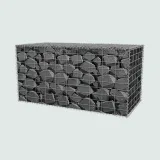
A gabion is a box of steel wire mesh, filled on site with hard stone and laced to its neighbours for retaining walls, river training and erosion control. The British Board of Agrément certificate for Maccaferri gabions gives the usual stone size as 100 to 200 mm.
In stock in Zanzibar
See all 11 products
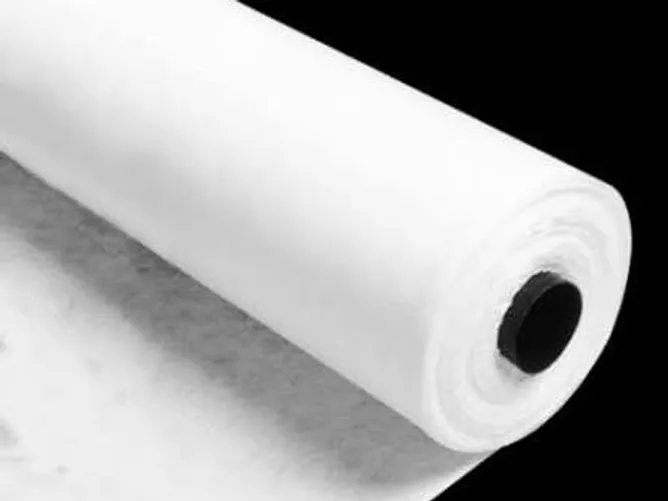
Non-Woven Needle-Punched Polypropylene Geotextile 200 g/m²
200 g/m²Order on WhatsAppTZS 526,000perroll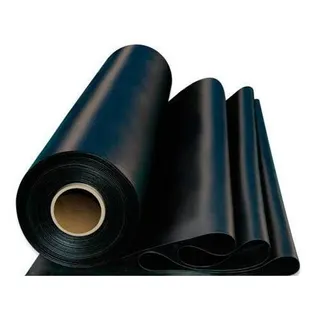
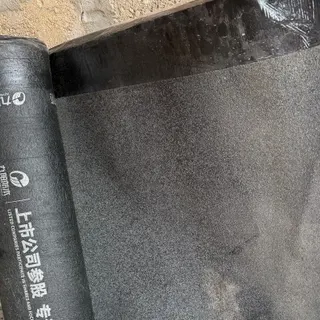
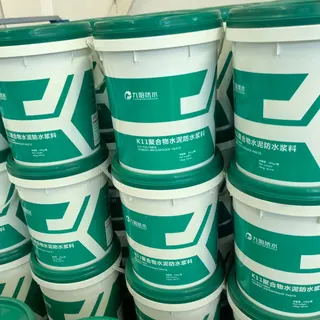
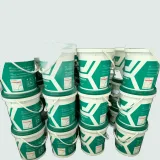
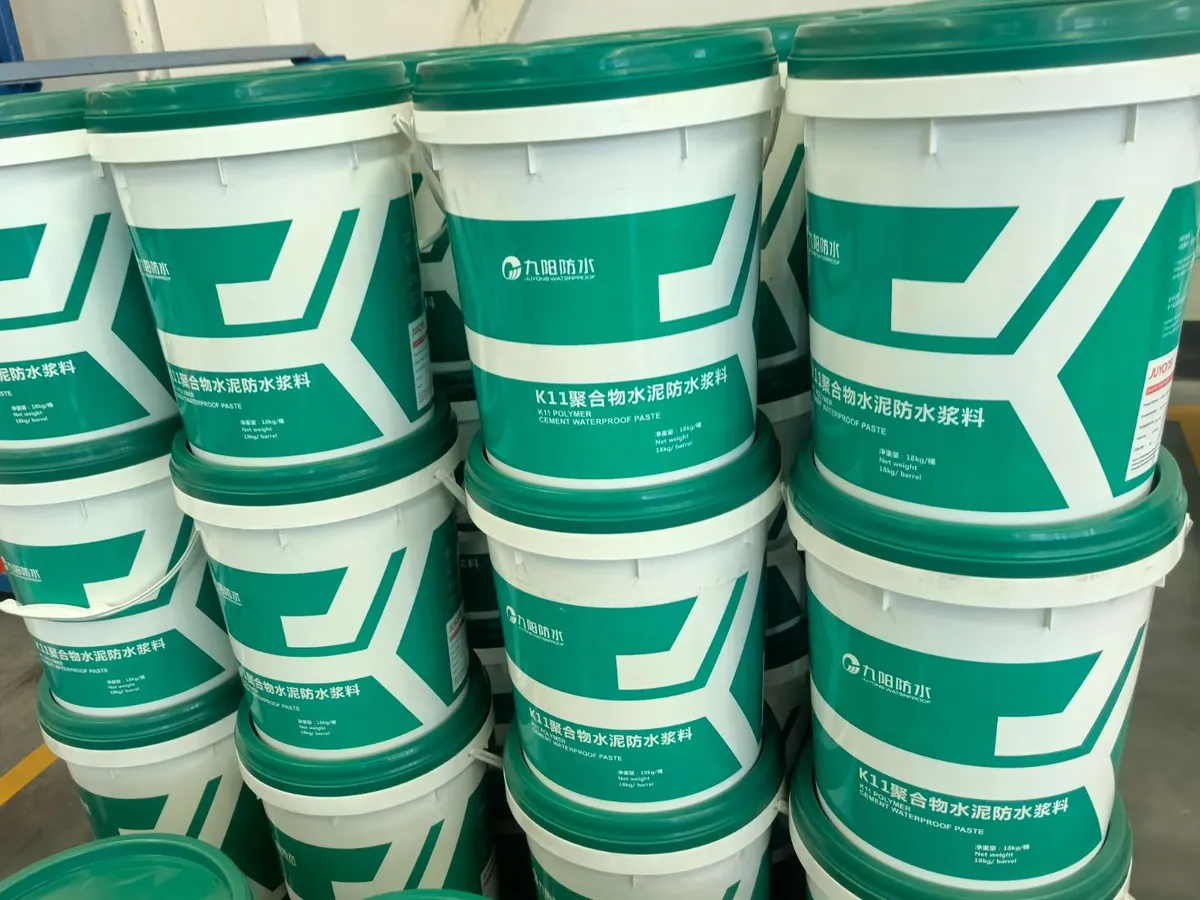
K11 Polymer Cement Waterproof Coating (Two-Component)
18 kg/barrelOrder on WhatsAppTZS 155,000perbucket
What a gabion is
A gabion starts as a flat pack of mesh panels. Opened on site, the panels form a box with a base, sides, ends and a lid; internal panels called diaphragms split longer boxes into cells. The box is filled with stone, the lid is laced down, and the filled gabion works as one heavy block.
The figures on this page come from two Maccaferri documents: British Board of Agrément (BBA) HAPAS certificate 16/H247 for Maccaferri gabions, and the maker’s gabion installation guide (revision 4, January 2018). The BBA describes the cages as hexagonal double-twisted wire mesh made of galvanised steel wire, with a zinc-aluminium coat and an outer polymer coating, and rates them for retaining walls, river training and erosion control.
Gabion box sizes
Maccaferri’s standard gabion box sizes, for mesh with a 2.7 mm core wire, are listed in Table 1 of the BBA certificate:
| Length | Width | Height |
|---|---|---|
| 1 m, 1.5 m, 2 m | 1 m | 0.5 m or 1 m |
| 3 m, 4 m | 1, 2 or 3 m | 0.5 m or 1 m |
| 5 m, 6 m | 2 or 3 m | 0.5 m |
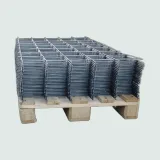
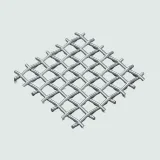
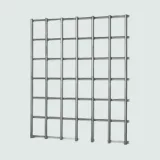
Other sizes are made to order. The 2 × 1 × 1 m box is in the standard list; the 5 and 6 m units come only 0.5 m high. Gabion mattresses (Reno mattresses) and welded-mesh gabion baskets are sold next to woven boxes, as on the maker Shengsen’s product list.
Gabion wire and coating
The wire is what decides the life of a gabion. According to the BBA certificate:
- The mesh is woven into hexagons with double-twisted joints, and thicker selvedge wire runs along the cut edges.
- The steel has a minimum tensile strength of 350–550 N/mm² and stretches at least 8% before it breaks.
- Wire diameters run from 2.0 to 3.9 mm; a 2.7 mm core wire with PVC or PoliMac coating measures 3.7 mm outside.
- The metal coating on PVC- and PoliMac-coated wire is Class A, the thickest class of BS EN 10244-2; for 2.7 mm wire that is at least 245 g/m² of zinc or zinc-aluminium.
- In the BBA’s opinion, polymer-coated gabions installed as certified can be considered to have a design life of more than 120 years.
A buyer comparing two gabion boxes should ask for the same three numbers: core wire diameter, coating weight in g/m² and whether there is a polymer coat. Mesh size alone does not show any of them.
Stone fill
The BBA certificate says stone for gabions is normally 100 to 200 mm, with the lower size set by the mesh openings, and must be hard stone that does not break down, quarried or naturally rounded. Maccaferri’s guide repeats the 100–200 mm range and allows 5% oversize and 5% undersize stone, never larger than 250 mm or smaller than 50 mm, and never on the visible face.
Filled gabions weigh less than solid rock: the BBA advises taking their density as 60–70% of the density of the stone itself. For a stone of 2.6 t/m³, that is about 1.6–1.8 t per cubic metre of gabion (our calculation from the BBA range; use the density of your own stone).
Building a gabion wall
These steps follow the Maccaferri installation guide and the BBA certificate:
- Level and grade the foundation, free of loose material and vegetation; provide filtering and drainage under it as the project specification asks.
- Open each flat-packed gabion box on a hard surface, raise the sides, ends and diaphragms, and lace the edges.
- Place a row of empty boxes, lace them to each other, then fill.
- Fill in thirds of the height. In 1 m units, fit bracing wires at one third and two thirds; the BBA asks for four bracing wires per square metre of visible face.
- Never let one cell stand more than 300 mm higher than the cell next to it.
- Overfill by 25–40 mm to allow for settlement, close the lid and lace it along every edge and diaphragm.
A gabion wall is a gravity retaining wall. The BBA states that structures built with gabions should be designed by a qualified engineer, who also specifies the stone fill and the backfill behind the cages.
Gabion wall drainage and geotextile
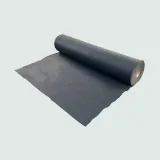
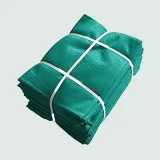
Maccaferri’s guide states that geotextiles installed behind gabion structures must meet the requirements for subsurface drainage. Kitovu has a Non-Woven Needle-Punched Polypropylene Geotextile 200 g/m² in stock in Zanzibar; similar products list filtration and drainage among their functions, not confirmed for this item, so check it against the project’s drainage specification.
Gabion price
Gabion prices are not listed on this site yet. Listed prices for weld mesh, BRC and chicken wire from Tanzanian shops, with dates, are on the wire mesh price page. For the different mesh types, see types of wire mesh.