













































































































Barbed wire for fences and wall tops
Published · Updated
Barbed wire is line wire twisted into a strand with short barbs wrapped on at intervals. Fence maker Bekaert sells it with 2-point or 4-point barbs; its standard barb spacing is 5 inches (127 mm), with 3 inches (76 mm) offered for places with heavy animal traffic.
In stock in Zanzibar
See all 11 products
Non-Woven Needle-Punched Polypropylene Geotextile 200 g/m²
200 g/m²Order on WhatsAppTZS 526,000perroll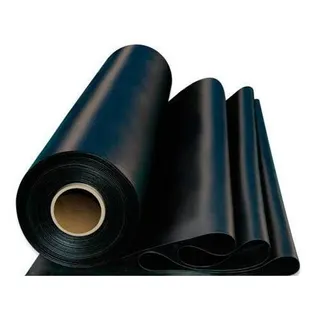



K11 Polymer Cement Waterproof Coating (Two-Component)
18 kg/barrelOrder on WhatsAppTZS 155,000perbucket



What barbed wire is
A barbed wire is steel line wire twisted into a strand, with short barbs fastened to it at even intervals. According to Bekaert’s barbed wire range, barbs come with two or four points, and the standard spacing between them is 5 inches; Bekaert also makes a reverse-twist type in which the strands change direction at each barb, which the maker says sags less.
Not every type is double-stranded. South African manufacturer Wholesale Fencing SA sells a single-strand type on a 2.00 mm line wire and an oval single-strand type on a 2.80 × 1.90 mm wire, next to its double-strand rolls.
Types of barbed wire
| Type | What it is | Example from a maker |
|---|---|---|
| Double strand | two line wires twisted together, barbs between | Iowa: 2.00 mm per strand, 800 m roll, about 50 kg (Wholesale Fencing SA) |
| Single strand | one line wire carrying the barbs | Agribarb: 2.00 mm, 845 m roll (Wholesale Fencing SA) |
| Oval single-strand | one line wire of oval section | Karoo-1: 2.80 × 1.90 mm, 845 m (Wholesale Fencing SA) |
| High-tensile | thinner high-strength wire | Gaucho 15.5 gauge and Cattleman Pro 14 gauge (Bekaert) |
| Barbless wire | twisted strand with no barbs | 12.5 gauge barbless wire (Bekaert) |
Barbless wire answers a different need: Spanish wire maker Moreda offers its barbless stranded wire to avoid damaging the coats of cattle. Gauges in the table are the US gauges used for fence wire, not millimetres; by the CLFMI chain link manual’s table, 14 gauge equals 2.03 mm, so ask for millimetres when a quote gives only a gauge.
Zinc coatings
The zinc layer decides how long the wire lasts outdoors. Canadian maker Tree Island states that its strand and barb wires carry Class 1 or Class 3 zinc coating meeting ASTM A121, the ASTM standard for coated barbed wire. Class 3 carries roughly three times the zinc of Class 1, according to a Virginia Tech fencing guide; Bekaert sells both classes and offers coating guarantees of 20 to 40 years on some lines, by its own statement.
Wholesale Fencing SA names its two grades differently: Class C for standard galvanising and Class A for heavy galvanising. These letters are the maker’s own grading, so compare grades within one maker’s list.
Barbed wire on fences and wall tops
On a chain link fence, the wire runs above the fabric on barb arms fixed to the post tops. The chain link fence specification of the Chain Link Fence Manufacturers Institute describes three-strand arms set at 45° or vertical and V-shaped arms for six strands, with each strand stretched taut between the terminal posts.
On a wall carrying an electric fence, the wire on top must stay dead. Nemtek’s installer manual for its energisers states that barbed wire and razor wire shall not be electrified.
What to check when you buy barbed wire
- Strands and wire size. Single or double strand, and the line wire diameter in millimetres.
- Barbs. Two or four points, and the spacing: Bekaert’s standard is 127 mm, 76 mm for heavy animal traffic.
- Coating grade. The class and the standard it refers to, from the same maker.
- Roll length and weight. An 800 m roll of about 50 kg, as in the Iowa example, gives roughly 16 m of wire per kilogram (our calculation); use the same check to compare rolls of different lengths.
- High-tensile or standard. Bekaert makes its high-tensile type in 14 and 15.5 gauge and its standard wire in 12.5 gauge, so compare by type, not by gauge alone.
Barbed wire in Zanzibar
Kitovu sells from stock in Zanzibar, and this wire is not among its products. For a mesh to carry it, see types of wire mesh and welded mesh.