













































































































Bitumen waterproofing membrane: how APP torch-on rolls work
Published · Updated
A bitumen waterproofing membrane is a factory-made roll of polymer-modified bitumen on a polyester or glass-fibre reinforcement, melted onto a primed surface with a gas torch. Rolls from Grupo Puma, Sika and Danosa all measure 1 m × 10 m, at 4 kg/m² or 4 mm.
In stock in Zanzibar
See all 11 products
APP Torch-On Waterproofing Membrane, Mineral Finish
3 mm, 4 mmTorch-on APP roll with a mineral top for flat roofs, terraces and foundations.
Order on WhatsAppTZS 192,000perroll
K11 Polymer Cement Waterproof Coating (Two-Component)
18 kg/barrelBrush-on cement coating for bathrooms, kitchens, balconies, basements and pools; tiles can go over it.
Order on WhatsAppTZS 155,000perbucket
Water-Based Bitumen Primer for Waterproofing Membranes
20 kgWater-based primer brushed on the base before a bitumen membrane goes down.
Order on WhatsAppTZS 126,240perbucket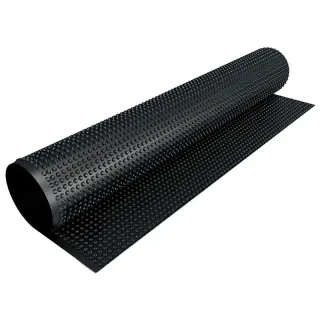
Dimple Drainage Membrane 8 mm with Geotextile (HDPE Drainage Board)
Studded drainage membrane that protects foundation walls below ground.
Order on WhatsAppTZS 328,000perroll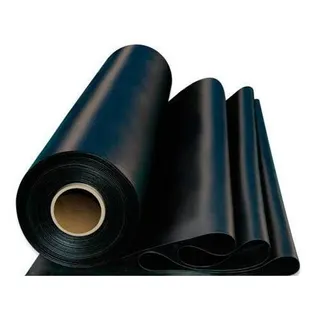
HDPE Geomembrane (Dam Liner), Smooth, 0.3 mm
Smooth0.3 mm0.3 mm HDPE sheet, ordered by Kitovu for damp proofing under floor slabs.
Order on WhatsAppTZS 1,052,000perroll



What a bitumen membrane roll is
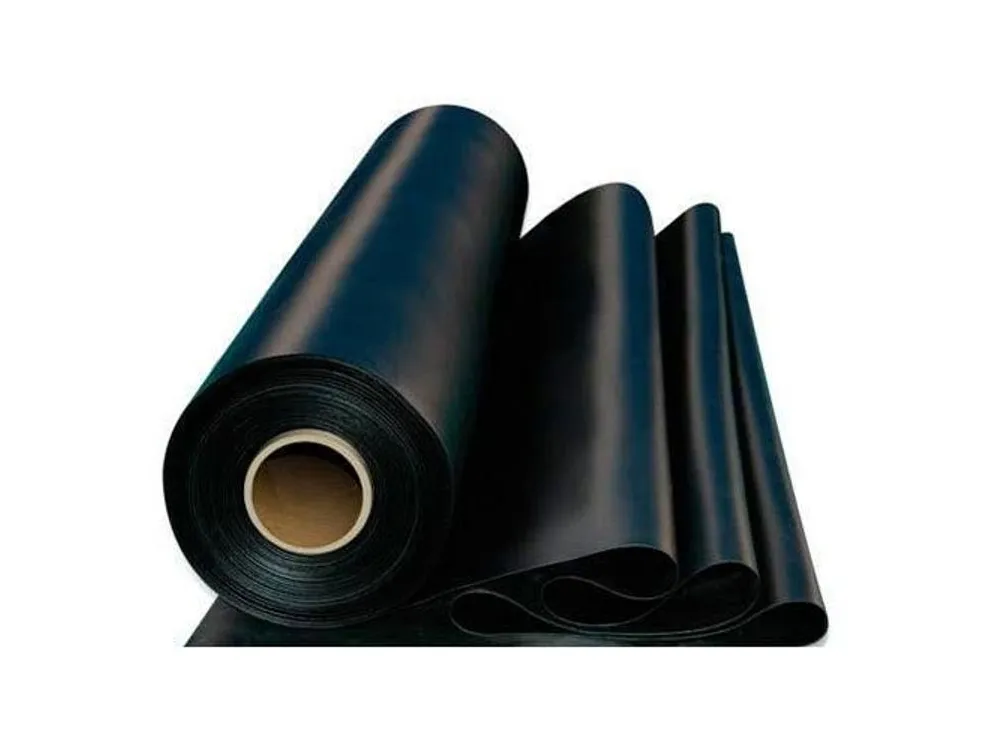
A bitumen sheet, also sold as a bituminous membrane, has three parts. In the middle sits a reinforcement — a non-woven polyester felt, a glass-fibre mat, or both. Both faces are coated with bitumen that has been modified with a polymer. The top and bottom are finished with a thin plastic film, talc or mineral granules.
The polymer gives the two main families their names. APP rolls use a plastomer (atactic polypropylene): Grupo Puma’s data sheet calls its Imperpuma Plus V4 a “plastomer (APP) modified bitumen membrane”. SBS rolls use an elastomer (styrene-butadiene-styrene), as in Danosa’s Polydan 180-40 P Elast. Most of these rolls are laid by torch, which is why searches use “torch-on membrane” and “torch-on waterproofing” for the same product. The membrane family as a whole, including rubber and liquid types, is covered on the waterproofing membrane page.
APP and SBS rolls compared
Three manufacturers’ data sheets, each for a 1 m × 10 m roll:
| Roll | Polymer | Reinforcement | Mass or thickness | Cold flexibility (EN 1109) | Heat resistance (EN 1110) |
|---|---|---|---|---|---|
| Grupo Puma Imperpuma Plus V4 | APP | glass fibre | 4 kg/m² | −15°C | 120°C |
| Sika Fidia P 4 mm | APP | polyester stabilised with glass fibre | 4 mm | −10°C | 110°C |
| Danosa Polydan 180-40 P Elast | SBS | polyester | 4 kg/m² | below −15°C | 100 ± 10°C |
In these three sheets the APP rolls hold their shape at 110–120°C and the SBS roll at 100 ± 10°C, while the cold-bend figures overlap. Heat resistance matters on a dark roof under strong sun; low-temperature flexibility matters most in cold climates. Compare the numbers on the actual roll rather than relying on the letters APP or SBS alone.
Reinforcement and top finish
Polyester and glass fibre behave differently under the torch. Sika warns that the polyester in its Fidia P melts at 260°C, so over-torching ruins the sheet; glass fibre is the reinforcement in the Grupo Puma rolls.
The top face decides where the roll may go:
- Film or talc finish — for layers that will be covered. Grupo Puma lists its film-faced V4 for use under heavy protection, as the lower layer of a two-layer roof and for underground structures. Sika’s talc-faced Fidia P is a base sheet for multi-layer systems, flat roofs under protection or ballast, balconies under tiles, basements and wet areas.
- Mineral finish — slate granules shield the bitumen from sunlight. Grupo Puma’s V4 G is the exposed top layer of a two-layer roof. The APP Torch-On Waterproofing Membrane, Mineral Finish in Kitovu’s Zanzibar stock is a roll of this kind. Lighter mineral-faced sheets nailed onto sheds are a different product, covered under roofing felt.
How a torch-on membrane is laid
The steps below are those in Sika’s Fidia P data sheet (March 2026). Other makers set their own laps and temperatures, so follow the sheet for the roll you buy.
- Make sure the deck is firm, smooth, clean and dry, with no sharp edges, grease or dust.
- Apply a suitable bitumen primer at the stated consumption and let it dry.
- Unroll the membrane, align it, then roll it back up before torching.
- Heat the substrate and the backing film with a gas burner; once the film starts to melt, roll the membrane forward and press it down.
- Lap side edges by 100 mm and roll ends by 150 mm. A bead of melted bitumen should show along the full length of every lap.
- Cut and seal every corner, upstand, vent pipe and drain.
- Lift and re-torch any area that did not bond; do not over-torch.
Sika gives an application range of +5°C to +50°C for air and substrate. Laps differ between makers: Danosa asks for 80 mm side and 100 mm head laps on its SBS roll, with joints staggered by at least 300 mm.
What to check when you buy a bitumen waterproofing membrane
- The standard. Sika declares EN 13707 (reinforced bitumen sheets for roofs) and EN 13969 (damp-proofing, including basement tanking) for Fidia P. Grupo Puma declares EN 13707.
- Mass or thickness. Grupo Puma measures its nominal 4 kg/m² roll at 3.80–4.40 kg/m². A roll sold only as “4 mm” with no data sheet cannot be checked.
- Finish against exposure. Mineral for a top layer in the sun; film or talc for layers that will be covered.
- Reinforcement. Polyester or glass fibre, named on the label.
- Storage and age. Sika: 36 months from production, stored upright at +5°C to +30°C; Grupo Puma: up to 12 months, upright and dry.
Bitumen itself, the material inside every roll, has its own page on bitumen grades and uses.
Questions
What is bitumen waterproofing?
Waterproofing in which bitumen forms the barrier: as a reinforced sheet (membrane) bonded to the surface, or as a paint, emulsion or primer applied cold. On flat roofs, balconies and basements the sheet form is the main layer.
How does bitumen waterproofing work?
Bitumen does not let water through. In a torch-on membrane the underside is melted so that it bonds to the primed deck and to the next roll at each lap; the reinforcement inside carries the tension, and the bitumen fills the joints.