













































































































Concrete poles and posts set in concrete
Published · Updated
Pole concrete covers two jobs: precast concrete poles for power lines and fences, and concrete poured round a timber, steel or concrete post to hold it in the ground. For the second, Tarmac's Blue Circle Postcrete data sheet asks for a hole three times wider than the post and gives a setting time of 5 to 10 minutes.
In stock in Zanzibar
See all 11 products
Polypropylene Fibre for Concrete and Mortar
Mixed into concrete, screed and mortar to limit plastic shrinkage cracks.
Order on WhatsAppTZS 15,100perkg
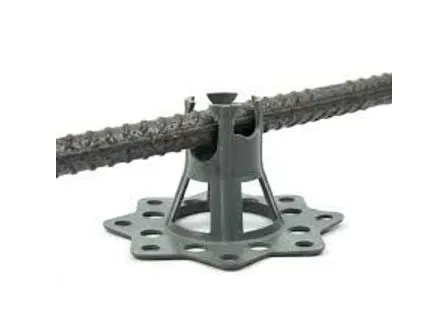
Plastic Rebar Chairs with Base (Rebar Spacers)
Plastic chairs that hold rebar at the right cover while concrete is poured.
Order on WhatsAppTZS 2,630perpiece
K11 Polymer Cement Waterproof Coating (Two-Component)
18 kg/barrelOrder on WhatsAppTZS 155,000perbucket





Pole concrete: poles or posts set in concrete
People searching for pole concrete want one of two things. Some are buying concrete poles — precast columns that carry power lines or hold fence wire. Others need to fix a pole in concrete: a gatepost, a washing-line post or a fence post set in a concrete footing. This page covers both, each from a manufacturer’s own figures.
Precast concrete poles
A precast pole is cast in a mould at a plant, cured, and delivered whole. The trade magazine Crown Publications reported on such poles from Rocla, a South African precast maker, which load-checked an 11 m cast concrete pole rated at 8 kN against the South African pole code SANS 470.
Rocla lists the benefits of concrete over timber poles: no maintenance, a better fire rating, and less theft, because broken concrete has no resale value.
How a pole’s load is rated
The Rocla test shows how pole ratings work. Each figure is a sideways pull applied 300 mm below the tip:
| Rating | Meaning | 11 m – 8 kN pole |
|---|---|---|
| Ultimate load | the load the pole must support | 8 kN |
| Working load | ultimate load divided by the safety factor of 2.5 | 3.2 kN (our calculation: 8 ÷ 2.5) |
| Proof load | 10% above the working load | 3.52 kN (our calculation: 3.2 × 1.1) |
At proof load the testers measure deflection, the widest crack and the permanent set after the load is released, and note the load at which the first hairline crack appears. The pole in the article then went on to carry 10 kN without collapsing. How steel and concrete share load in general is covered under reinforced concrete.
Setting a pole in concrete
For fence and gate posts, ready-mixed post-fixing concrete removes the mixing step. Tarmac’s Blue Circle Postcrete data sheet gives these steps for timber, metal and concrete posts:
- Dig a hole three times wider than the post and as deep as one-third of the fence height above ground.
- Fill the hole with water to a third of its depth.
- Pour the dry mix evenly round the post until no standing water shows, then sprinkle water on top.
- Position and level the post; it sets in 5 to 10 minutes.
- Cover the top with soil once set. Fence panels can go on after the first 10 minutes.
Our worked example: for a fence 1.8 m high, the hole is 0.6 m deep (1.8 ÷ 3); for a 10 cm post, 30 cm wide (10 × 3).
How much mix a post needs
The data sheet gives quantities in 20 kg bags for each post and hole size. A selection:
| Post | Hole (width × depth) | 20 kg bags |
|---|---|---|
| round, 5 cm | 15 × 30 cm | 1/4 |
| round, 5 cm | 15 × 60 cm | 1/2 |
| square, 7.5 cm | 15 × 45 cm | 1/3 |
| square, 10 cm | 20 × 60 cm | 3/4 |
| square, 10 cm | 30 × 60 cm | 2 |
Where the quick mix is not enough
Tarmac limits Postcrete to domestic posts: fences, decking, rotary washing lines and small to medium gateposts for gates under 1.0 m wide. It is not for general concreting, screeds, mortar or render, and not where a specified compressive strength is required. Where a footing needs a specified strength, it is mixed from cement and graded aggregates to a design instead.