



















Glass fibre reinforced concrete (GRC or GFRC)
Published · Updated
Glass reinforced concrete (GRC, also GFRC) is a fine cement-sand mortar reinforced with 2–5% alkali-resistant glass fibre. Because the fibre runs through the whole section, panels are commonly only 10–15 mm thick, according to the International Glassfibre Reinforced Concrete Association's design guide.
In stock in Zanzibar
See all 11 products
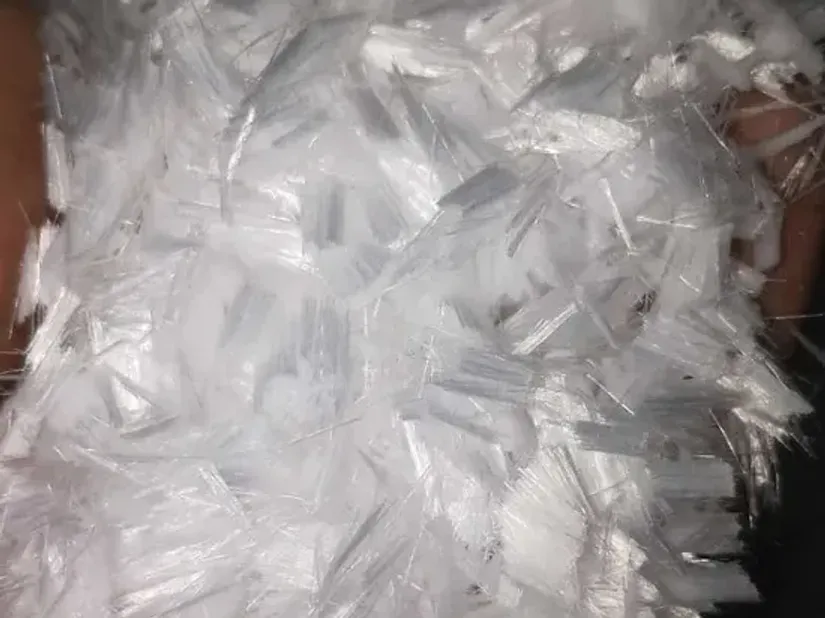
Polypropylene Fibre for Concrete and Mortar
12 mm polypropylene monofilament fibre against plastic shrinkage cracks, 0.9 kg per m³.
Order on WhatsAppTZS 15,100perkg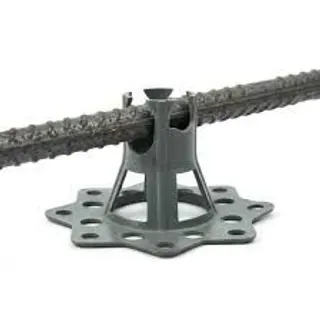
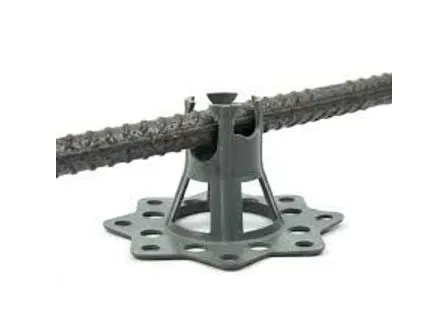
Plastic Rebar Chairs with Base (Rebar Spacers)
Plastic chairs that hold rebar at the right cover while concrete is poured.
Order on WhatsAppTZS 2,630perpiece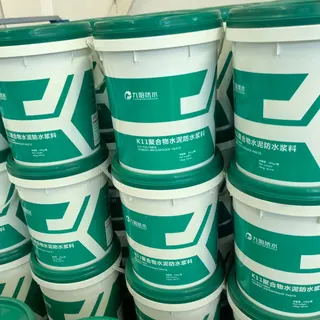
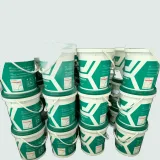
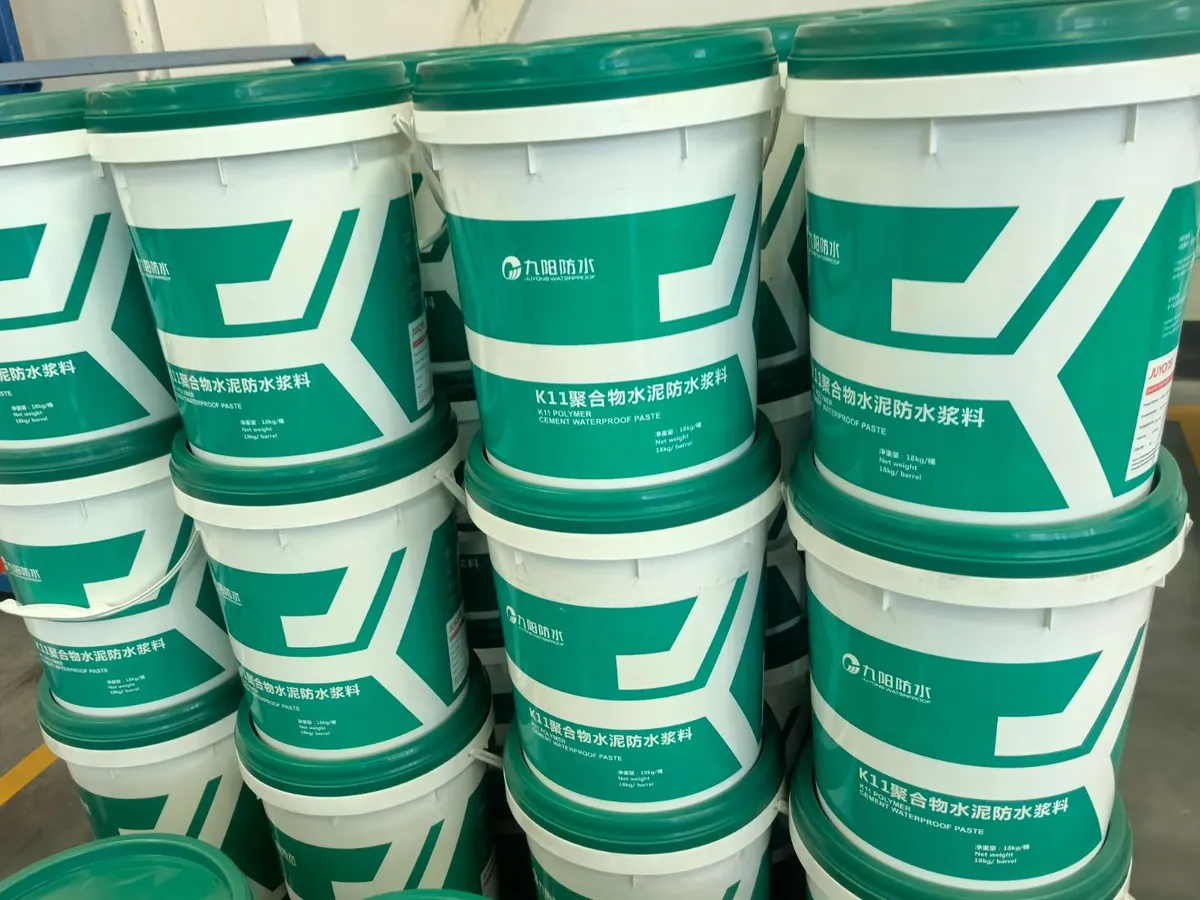
K11 Polymer Cement Waterproof Coating (Two-Component)
18 kg/barrelOrder on WhatsAppTZS 155,000perbucket
Glass reinforced concrete (GRC): what it is
Glass reinforced concrete is not ordinary concrete with glass in it. It is a mortar of cement and fine sand, at a sand-to-cement ratio of up to 1:1, reinforced with chopped glass fibres at 2–5% of the mix, and sometimes with polymer, fillers and pigments added. That is the definition the International Glassfibre Reinforced Concrete Association (GRCA) uses in its Practical Design Guide, version 1.1 of March 2018, the main source for this page.
The difference from reinforced concrete is where the reinforcement sits. In a reinforced concrete beam, steel bars are placed in the tension zone with a set cover of concrete. In glass fibre reinforced concrete, the guide explains, the fibres are spread at random through the whole section, so the material is designed as if it were uniform. That is why it can be made so thin: there is no bar to cover.
Why the glass must be alkali-resistant
Cement paste is strongly alkaline. The GRCA guide gives a typical pH of 12.9 and notes that the ordinary E-glass fibres used in plastics are destroyed quickly in it. GRC therefore uses alkali-resistant (AR) glass fibre, whose zirconia content resists the attack; laboratory testing, the guide says, shows that at least 16% zirconia is needed.
The material itself only became practical once that fibre existed. A 2005 paper presented to the GRCA congress by Power-Sprays Ltd of the UK dates the first commercial applications of GRC to the 1970s, after high-zirconia AR fibre was developed and brought to market.
Sprayed and premix GRC
The two main ways of making reinforced glass concrete give different fibre contents and strengths.
| Sprayed GRC | Premix GRC | |
|---|---|---|
| How it is made | fibre chopped in a gun and sprayed with the slurry onto a mould, then compacted by roller and trowel | pre-chopped fibre mixed into the slurry, then vibration cast, extruded or injection moulded |
| Fibre content by weight | typically 4–5% | typically 2–3.5% |
| Fibre length | 25–40 mm | 12–13 mm |
| Typical products | cladding panels, facade elements, channels, tanks, ducting, permanent formwork | small architectural items made quickly in multiple moulds |
Source: GRCA Practical Design Guide, sections 1 and 2. The same guide calls sprayed GRC the strongest form of the material. The 2005 congress paper adds that hand spraying needs strict factory control, including a fibre content kept between 4.0 and 5.5%.
Strength, density and thickness
Ordinary concrete is graded by compressive strength. GRC is graded by flexural strength, the stress at which a thin test strip breaks in bending: Grade 18 means a characteristic modulus of rupture of 18 N/mm² at 28 days. The guide’s typical 28-day test values are:
| Property | Sprayed GRC | Premix GRC |
|---|---|---|
| Limit of proportionality (LOP) | 5–10 N/mm² | 5–10 N/mm² |
| Modulus of rupture (MOR) | 18–30 N/mm² | 5–14 N/mm² |
| Dry bulk density | 1.8–2.1 t/m³ | 1.8–2.0 t/m³ |
| Water absorption | 8–13% | 8–13% |
Source: GRCA Practical Design Guide, sections 2.2 and 2.7; flexural tests to BS EN 1170 parts 4 and 5 or a modified ASTM C947. The guide stresses that these values cannot be assumed: each manufacturer should test its own boards.
The guide puts the common thickness at 10–15 mm and the density at around 2,000 kg/m³, below that of dense concrete. A 12 mm skin at that density weighs about 24 kg per square metre (our calculation, 0.012 m × 2,000 kg/m³). Cladding panels can also be built on a steel stud frame, which the guide describes, so a finished unit weighs more than the bare skin.
Where glass fibre reinforced concrete is used
The guide lists the typical sprayed products: architectural cladding panels, facade elements, channels, tanks, ducting and permanent formwork. Premix, by the same guide, suits small architectural items produced in numbers from multiple moulds.
On performance, the GRCA guide states that GRC will not rot or corrode, is made of inorganic materials, will not burn and gives off negligible smoke. Because the panels are thin, they need additional material where insulation is required. GRC made with polymer can perform slightly differently in fire, and the guide flags that too.
For other ways of adding fibre to ordinary site concrete, see concrete fibre; for chemical additions to the mix, see concrete admixtures.
What to ask a GRC supplier
- Spray or premix, and the fibre content by weight.
- Fibre type: alkali-resistant glass with at least 16% zirconia.
- Thickness of the skin and the back support (ribs or frame).
- Flexural strength grade and the 28-day test results for the batch.
- Density and water absorption from the supplier’s tests.
- Fixings and how the panel is attached to the building.
The supplier’s test records, not a catalogue photo, show whether a GRC element meets the numbers above.
Questions
How thick is GFRC?
Commonly 10 to 15 mm, according to the GRCA Practical Design Guide. That thin section, not a light material, is what makes GRC components light: the material itself weighs about 2,000 kg/m³.
How is GFRC made?
By spraying or by premixing. In the spray process, chopped glass fibre and cement slurry are sprayed onto a mould together and compacted by roller; in premix, short fibres are mixed into the slurry first and the mix is vibration cast, extruded or injection moulded.