













































































































Expansion joints in concrete and buildings
Published · Updated
An expansion joint is a planned gap between two sections of concrete that lets them grow and shrink without cracking each other. The US Federal Highway Administration gives concrete a thermal expansion of about 8 to 12 millionths of its length per °C; a 30 m slab warming by 20°C grows about 6 mm.
In stock in Zanzibar
See all 11 products
Polypropylene Fibre for Concrete and Mortar
12 mm polypropylene monofilament fibre against plastic shrinkage cracks, 0.9 kg per m³.
Order on WhatsAppTZS 15,100perkg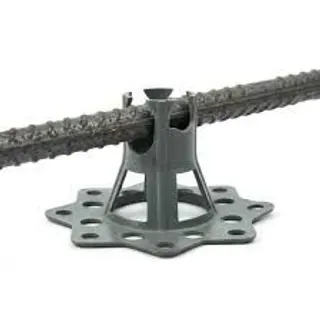
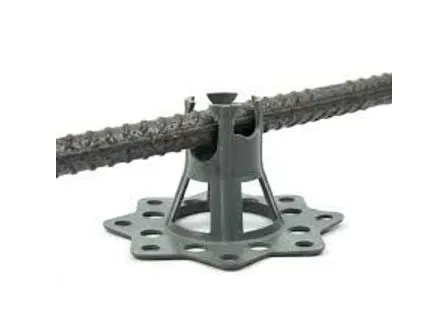
Plastic Rebar Chairs with Base (Rebar Spacers)
Plastic chairs that hold rebar at the right cover while concrete is poured.
Order on WhatsAppTZS 2,630perpiece
K11 Polymer Cement Waterproof Coating (Two-Component)
18 kg/barrelOrder on WhatsAppTZS 155,000perbucket





Expansion joint: what it is and why concrete moves
Concrete changes size with temperature and moisture. The US Federal Highway Administration’s pavement research page puts the coefficient of thermal expansion of Portland cement concrete at about 8 to 12 microstrain per °C, with the aggregate deciding where in that range a mix falls: 6 for limestone, 11–13 for quartzite. The same FHWA table lists the components separately, in millionths per °C:
| Component | Thermal expansion |
|---|---|
| Limestone aggregate | 6 |
| Basalt aggregate | 6–8 |
| Granite aggregate | 7–9 |
| Sandstone aggregate | 11–12 |
| Quartzite aggregate | 11–13 |
| Saturated cement paste | 18–20 |
| Concrete (overall) | 7.4–13 |
| Steel | 11–12 |
Steel falls inside the concrete range, which is why bars and concrete can move together inside a member; a steel frame of I-beams and H-beams moves by about the same amount per degree. The paste moves far more than the stone, so a mix with more paste and a high-expansion aggregate sits at the top of the range.
Those small numbers add up over length. Take a slab 30 m long that warms by 20°C between a cool night and a hot afternoon: at 10 microstrain per °C it grows 30,000 mm × 0.00001 × 20 = 6 mm, and between 4.8 and 7.2 mm across the FHWA range (our calculation). If nothing lets that movement happen, the slab pushes against walls, columns or the next slab, and something cracks. An expansion joint, shortened to exp joint on many drawings, is the planned place for it to happen.
Expansion, contraction, isolation and construction joints
The word “joint” covers several different details. The American Concrete Institute, citing ACI 224.3R-95, defines them as follows:
| Joint | What it is | Reinforcement |
|---|---|---|
| Contraction (control) joint | a sawn, formed or tooled groove that makes a weakened plane, so the crack forms in the groove | runs through |
| Expansion joint | a separation between adjacent sections that allows movement as they grow and shrink; in slabs on ground, a gap filled with compressible filler | some or all interrupted |
| Isolation joint | a separation that lets adjacent sections move relative to each other in three directions | all bonded reinforcement interrupted |
| Construction joint | the planned surface where one pour meets the next | — |
| Cold joint | an unplanned break where a delay in placing stops fresh concrete from bonding to the earlier pour | — |
A concrete construction joint and a contraction joint are not movement joints; they are placed so that the inevitable crack or pour line falls where it does no harm. Construction joints are planned on the drawings with the pour sequence. A cold joint is the one to avoid.
Concrete expansion joints in slabs and paving: spacing and depth
For slabs on ground, the spacing rules apply to the contraction joints that cut the slab into panels. The ACI Committee 330 Parking Area Quick Reference gives three rules for jointing concrete paving:
- Joint spacing should not exceed 24 to 30 times the pavement thickness, with a maximum of 15 feet (4.6 m, our conversion).
- Joints should form square panels; where that is not practical, the long side of a rectangle should be no more than 1¼ times the short side.
- Control joints should be at least one-quarter of the slab thickness deep.
Worked through (our calculation): a 100 mm slab gets joints every 2.4–3.0 m, cut at least 25 mm deep; a 150 mm slab every 3.6–4.5 m, at least 38 mm deep. Where a slab meets something that does not move with it, the detail in ACI’s terms is a separation, not a groove: an isolation or cement expansion joint filled with compressible material.
Joint fillers
The gap in a concrete expansion joint is filled with a preformed strip that compresses when the slabs close up and recovers when they open. ASTM D1751 covers preformed expansion joint filler for concrete paving and structural construction of the nonextruding, resilient bituminous type; ACI 224.3R also refers to ASTM D1752 for sponge rubber and cork fillers. When comparing fillers, ask which of these specifications the product is made to and in which thicknesses it comes.
Ask also what closes the top of the joint and how it will be kept watertight. Where the slab is a roof or a wet room, the joint has to be part of the waterproofing design; see our page on waterproofing.
Expansion joint in a building
A building expansion joint is the same idea applied to the frame: in ACI’s words, a separation between adjacent sections of a concrete structure, with some or all of the bonded reinforcement interrupted, so each part can move on its own. Where it goes, how wide it is and how the two sides are supported are decisions for the structural engineer, based on the length of the building, its shape and its supports.
What the buyer and builder can do is make sure the details exist before the pour: the joint location on the drawings, the filler type and thickness, the cover strip or sealant at the surface, and how roofing and waterproofing cross the gap.
What to plan before the pour
- Mark every expansion, isolation and construction joint on the slab or frame drawings.
- For slabs, set contraction joint spacing and depth from the slab thickness (rules above).
- Order joint filler to a named specification, in the thickness the joint needs.
- Decide the sealant and the waterproofing detail at each joint.
- Plan pour breaks to fall at construction joints, not at random, so no cold joint forms.
The reinforcement that stops or runs through each joint is shown on the drawings; the bars themselves are on the rebar (nondo) page, and the forms that create a clean joint face are covered under formwork and shuttering.
Questions
Are expansion joints and contraction joints the same?
No. The American Concrete Institute defines a contraction joint as a sawn, formed or tooled groove that makes a weakened plane so cracks form there, and an expansion joint as a full separation that lets adjacent sections move as they expand and shrink.
How far apart should concrete expansion joints be?
For slabs on ground, the ACI Committee 330 parking-area guidance spaces contraction joints at no more than 24 to 30 times the slab thickness and 15 feet (4.6 m) at most. Expansion joints through a building are placed by the structural engineer for that structure.