













































































































Concrete admixtures: types, limits and when to use them
Published · Updated
A concrete admixture is a liquid or powder added in small amounts during mixing to change how concrete flows, sets or hardens. Under EN 206, as summarised in Sika's concrete handbook, the total dose may not exceed 5% of the cement weight unless its effect on performance and durability is verified.
In stock in Zanzibar
See all 11 products
Polypropylene Fibre for Concrete and Mortar
12 mm polypropylene monofilament fibre against plastic shrinkage cracks, 0.9 kg per m³.
Order on WhatsAppTZS 15,100perkg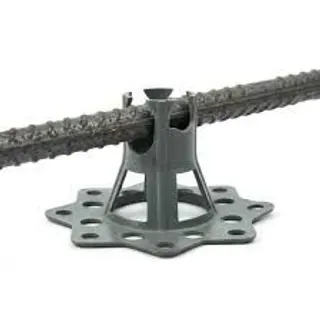
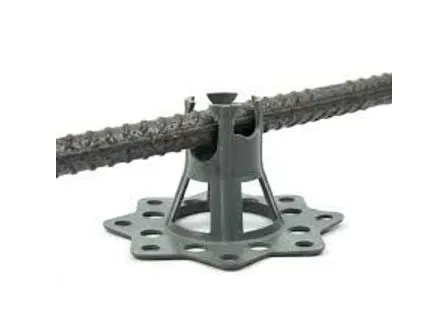
Plastic Rebar Chairs with Base (Rebar Spacers)
Plastic chairs that hold rebar at the right cover while concrete is poured.
Order on WhatsAppTZS 2,630perpiece
K11 Polymer Cement Waterproof Coating (Two-Component)
18 kg/barrelOrder on WhatsAppTZS 155,000perbucket





Concrete admixture: what it is
Concrete admixtures are chemicals added to the mixer in small quantities, liquid or powder, to change the fresh or hardened concrete. They are dosed by cement content, written as a percentage by weight of cement (% bwc). The Sika guide to concrete admixtures describes them as acting chemically, physically or both on cement hydration.
An admixture is not the same as a mineral addition such as silica fume, which the Sika handbook doses at 5–10% of the cement weight, well above the admixture limit below. Nor is it a coating applied to the finished concrete: a waterproofing admixture works inside the mix, while products such as a cementitious waterproof coating go on the surface afterwards.
Types of admixtures under EN 934-2
The European concrete standard EN 206 refers to the admixture types defined in EN 934-2. As listed in the Sika guide:
| Type | What it does |
|---|---|
| Water reducer / plasticiser | allows less water at the same consistence, or more flow at the same water |
| High-range water reducer / superplasticiser | the same effect, much stronger |
| Retarder | extends the time to initial set and the workable period |
| Set accelerator | shortens the time to initial set and raises early strength |
| Hardening accelerator | speeds early strength gain with little effect on setting |
| Air-entraining agent | creates evenly spread small air bubbles that stay in the hardened concrete |
| Viscosity modifier (stabiliser) | reduces bleeding, the loss of mix water to the surface |
| Water-resisting admixture | reduces capillary water absorption of the hardened concrete |
| Combined types | water reducer + retarder, superplasticiser + retarder, water reducer + set accelerator |
Sika adds products that fall outside EN 934-2: shrinkage-reducing, pumping aid, corrosion-inhibiting, blowhole-reducing and alkali-silica reaction control admixtures.
Plasticiser and superplasticiser: the numbers
The difference between the two is a test result, not a brand name. A Master Builders Solutions declaration quotes the EN 934-2 requirement: a plasticiser must reduce the water of a test mix by at least 5% against a control mix, a superplasticiser by at least 12%.
The EN 934-2 definition allows the effect to be used either way: the same consistence with less water, or more flow with the same water, or both at once. Which one a mix needs is set in the mix design. Sika’s guide notes that modern superplasticisers based on polycarboxylate ether (PCE) are designed polymer by polymer for water reduction, slump retention and early strength.
ASTM C494 types
Specifications written to American standards use letter types. ASTM C494, as summarised in the Sika guide, defines:
- Type A — water-reducing
- Type B — retarding
- Type C — accelerating
- Type D — water-reducing and retarding
- Type E — water-reducing and accelerating
- Type F — high-range water-reducing
- Type G — high-range water-reducing and retarding
- Type S — specific performance, such as slump retention
Other ASTM standards cover air-entraining admixtures (C260), pigments for coloured concrete (C979), corrosion-inhibiting admixtures (C1582), cold-weather admixture systems (C1622) and shotcrete admixtures (C1141). When comparing products, ask which type and which standard each one meets.
Dosage limits
EN 206 sets the frame for all admixtures in a mix, as summarised in the Sika Concrete Handbook, 2020 edition, table 3.3.1:
- Total dose no more than 5% by weight of cement, unless the effect of a higher dose on performance and durability is verified.
- Doses below 0.2% of cement only if dissolved in part of the mixing water.
- If liquid admixtures exceed 3 L per m³ of concrete, their water counts in the water-cement ratio.
- Where more than one admixture is used, their compatibility must be checked by testing.
For a mix with 350 kg of cement per m³, 5% is 17.5 kg and 0.2% is 0.7 kg (our calculation). The product data sheet gives the working dose inside that frame.
Admixtures in hot weather
The Sika handbook gives two temperature limits that matter in warm conditions: fresh concrete should not be hotter than 30°C when placed without protective measures, and above 25°C ambient, concrete without a retarder can start to cause problems because hydration speeds up and the mix stiffens before it can be placed. Its usual countermeasure is a retarding superplasticiser, or a superplasticiser combined with a set retarder. The handbook adds that the retarding effect depends on the cement and mix design, and only preliminary testing gives certainty.
A retarded mix also stays soft for longer, which affects how soon formwork can be struck; see formwork and shuttering. Fibres lower workability, and the American Concrete Institute notes that water-reducing admixtures are often used with them; see concrete fibre.
What to ask before buying an admixture
- The type under EN 934-2 or ASTM C494, from the data sheet.
- The recommended dose in % bwc and the maximum.
- Whether it is compatible with the cement you use and with any other admixture in the mix.
- Its effect on setting time at your expected concrete temperature.
- Shelf life and storage conditions.
Trial mixes with your own cement and aggregates answer points 3 and 4 better than any catalogue.
Questions
What are concrete admixtures?
Liquids or powders added to concrete during mixing in small quantities, dosed as a percentage of the cement weight. In Europe their types and requirements are set by EN 934-2; in the United States, chemical admixtures are classed as Types A to G and S in ASTM C494.
What are plasticizers?
Water-reducing admixtures. They let the same mix reach the same workability with less water, or flow more at the same water content. EN 934-2 asks a plasticiser to cut water by at least 5% against a control mix and a superplasticiser by at least 12%.