













































































































Twiga Cement (Tanzania Portland Cement)
Published · Updated
Twiga Cement is the brand of Tanzania Portland Cement Public Limited Company. Its factory at Wazo Hill in Dar es Salaam turned out its first bag in mid-1966, says the company's history page. The maker's home page names six main brands, from Twiga Jenga masonry cement to Twiga Ordinary Portland cement.
In stock in Zanzibar
See all 11 products
Polypropylene Fibre for Concrete and Mortar
Added to concrete and mortar mixes to limit plastic shrinkage cracks.
Order on WhatsAppTZS 15,100perkg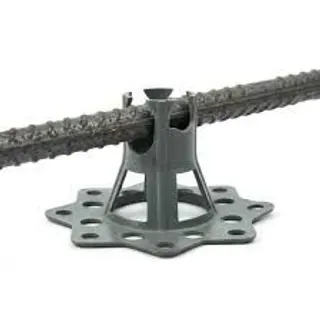
Plastic Rebar Chairs with Base (Rebar Spacers)
Plastic chairs that hold rebar at the right cover while concrete is poured.
Order on WhatsAppTZS 2,630perpiece
K11 Polymer Cement Waterproof Coating (Two-Component)
18 kg/barrelOrder on WhatsAppTZS 155,000perbucket





Who makes Twiga Cement
Twiga is the trading brand of Tanzania Portland Cement PLC (TPCPLC), a company listed on the Dar es Salaam Stock Exchange. The firm’s history page traces it to 1959, when Cementia Holdings of Switzerland set it up. Building work at Wazo Hill started in 1962, and the plant there produced the first bag of cement made in Tanzania in mid-1966. The state later took full control; the business returned to private hands in 1998.
On its home page the company calls itself a subsidiary of Heidelberg Materials Group. Scancem International DA holds 69.25% of the shares and the Tanzanian public owns the other 30.75%. Annual capacity, the same page says, went up to 1.4 million tonnes in 2009 and to 2.0 million tonnes by August 2014, under a project called CM5. The workforce is given as over a thousand people.
Twiga cement grades and what the maker says each is for
Every product page on twigacement.com gives the cement type and strength class, plus a few lines on what the grade does well. Twiga Cement Plus, as the grade is often searched for, appears on the maker’s site simply as Twiga Plus.
| Brand name | Type and class, as listed | What the maker says about it |
|---|---|---|
| Twiga Ordinary | CEM I 42.5N, Portland cement | highest share of clinker in the range; stronger than Twiga Extra |
| Twiga Plus | CEM II B/M 42.5N, Portland composite | lower heat of hydration, good workability, moulds well |
| Twiga Mega | CEM III B/SR 42.5N, slag cement | better workability, lower permeability, higher compressive and flexural strength |
| Twiga Extra | CEM II B/L 32.5R, Portland limestone | good workability; suited to forming, plastering and moulding |
| Twiga Plus Rapid | high early strength, rapid hardening (class not stated) | block making, ready-mix concrete, foundations, precast and infrastructure work |
| Twiga Super | 32.5N | named on the home page; no product page |
| Twiga Jenga | MC 22.5X, masonry cement | named on the home page; no product page |
On 12 November 2026 each of the five product pages offered monthly certificates as PDF downloads, the newest dated September 2026. If a site engineer asks for test data on a delivery, that is where to start.
How to read the code on a Twiga bag
Twiga writes its types and classes the way EN 197-1, Europe’s common-cement standard, codes them. A summary of the standard on Structville, written by the engineer Muyiwa Ajumobi, gives the key ranges:
- CEM I is mainly ground clinker with no more than 5% minor constituents.
- CEM II/B holds 65–79% clinker and 21–35% of another main constituent: L stands for limestone, M for a mix of constituents.
- CEM III/B is blast-furnace cement in which slag makes up 66–80%.
- 32.5 and 42.5 are 28-day compressive strength bands: 32.5–52.5 MPa and 42.5–62.5 MPa. Initial setting must take at least 75 minutes for class 32.5 and 60 minutes for 42.5.
N or R after the number concerns early strength. R marks the faster-gaining version: a Finnsementti data sheet quotes a minimum of 20 MPa at 2 days for class 42.5 R. Read side by side, the Twiga Extra code (32.5R) and the Twiga Ordinary code (CEM I 42.5N) show why the maker pitches one at forming, plastering and moulding and the other where higher strength counts.
Does Kitovu stock Twiga Cement?
No. Kitovu does not stock Twiga Cement, so buyers looking for Twiga cement in Tanzania need a Twiga distributor or a hardware shop near them. Kitovu sells from stock in Zanzibar, and no Twiga bag prices are shown here because no seller with a published price was found on 12 November 2026.
What Kitovu does hold, for concrete and mortar from any Twiga grade, is Polypropylene Fibre for Concrete and Mortar: 12 mm single-filament fibres that the supplier doses at 0.9 kg in each cubic metre, against plastic shrinkage cracking.
To compare Twiga with other makers and cement types, see the overview of cement types and grades and the full brands list. Simba cement, made by Tanga Cement, another Heidelberg Materials company according to its own site, is covered under Tanga Cement and Simba cement.